
From the Kitchen to the World: Lay Women and Catholic Internationalism after 1945
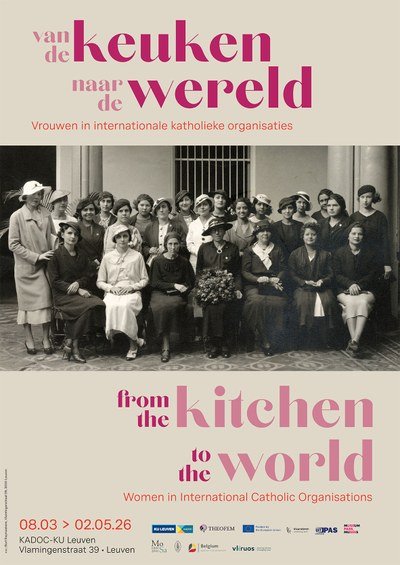
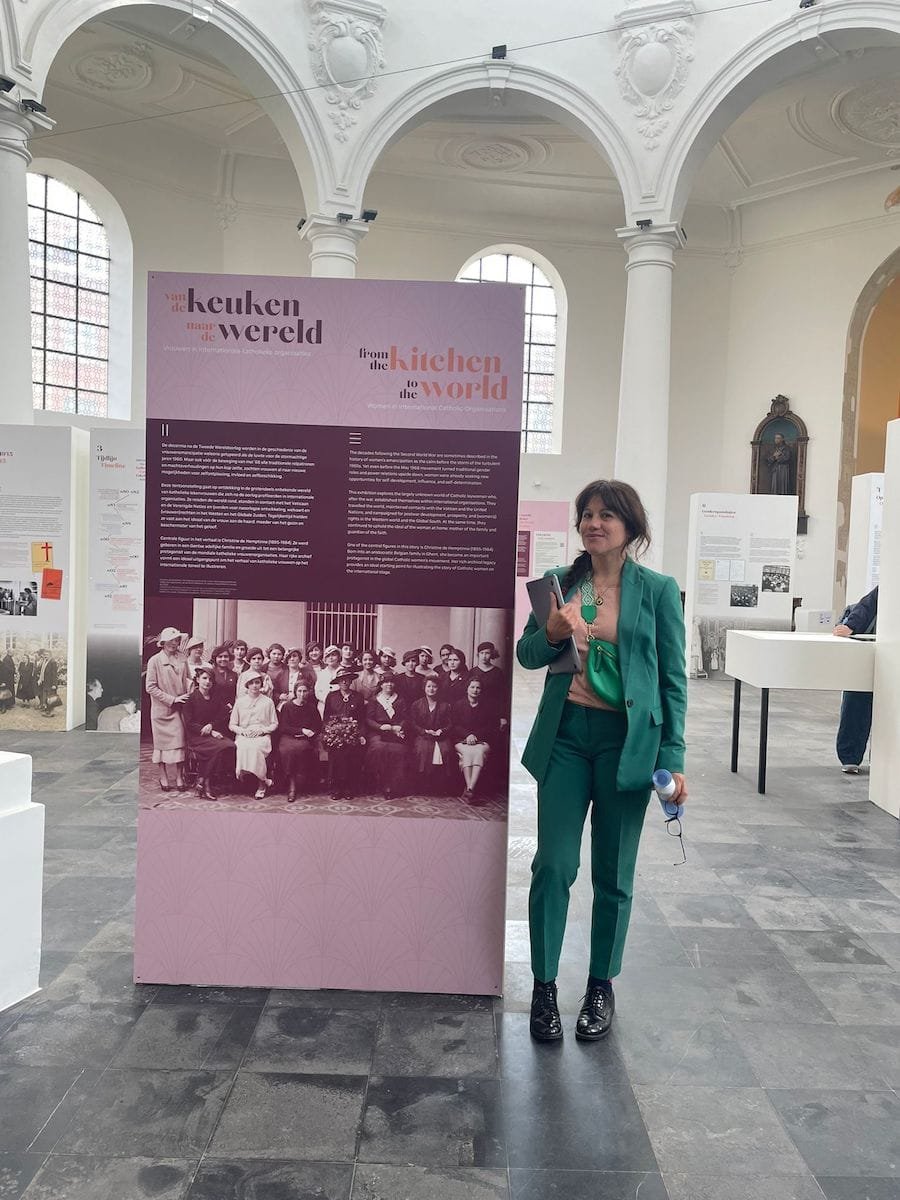
This exhibition is part of the TheoFem project and presents the results of two years of archival research on the history of Catholic laywomen in international organisations from the aftermath of the Second World War to the Second Vatican Council. Curated by Dr Natalia Núñez Bargueño, with the support of Dr Kristien Suenens and Roeland Hermans, it explores how laywomen engaged with international institutions, developed forms of expertise, and participated in shaping postwar global Catholicism.
By combining archival research, visual storytelling, and public engagement, From the Kitchen to the World reflects the core ambition of TheoFem: to recover the historical agency of laywomen, to rethink the place of religion in international history, and to make visible the gendered dynamics that shaped global Catholic networks throughout the twentieth century.
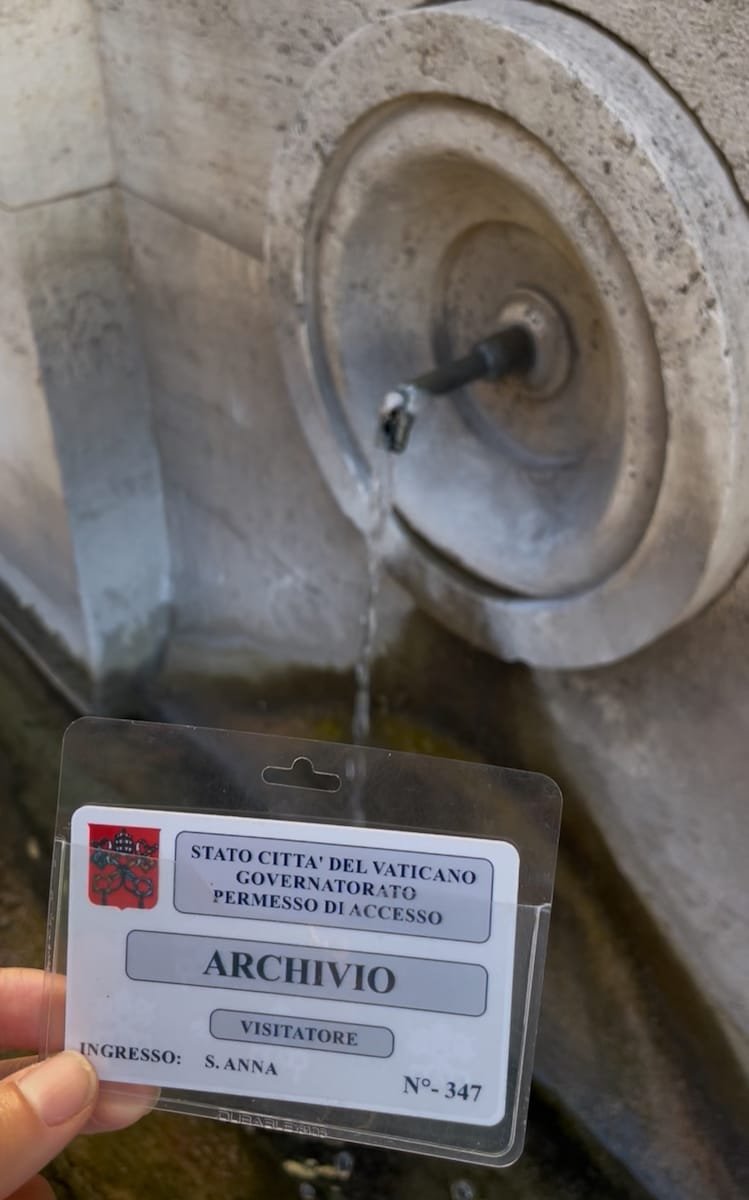
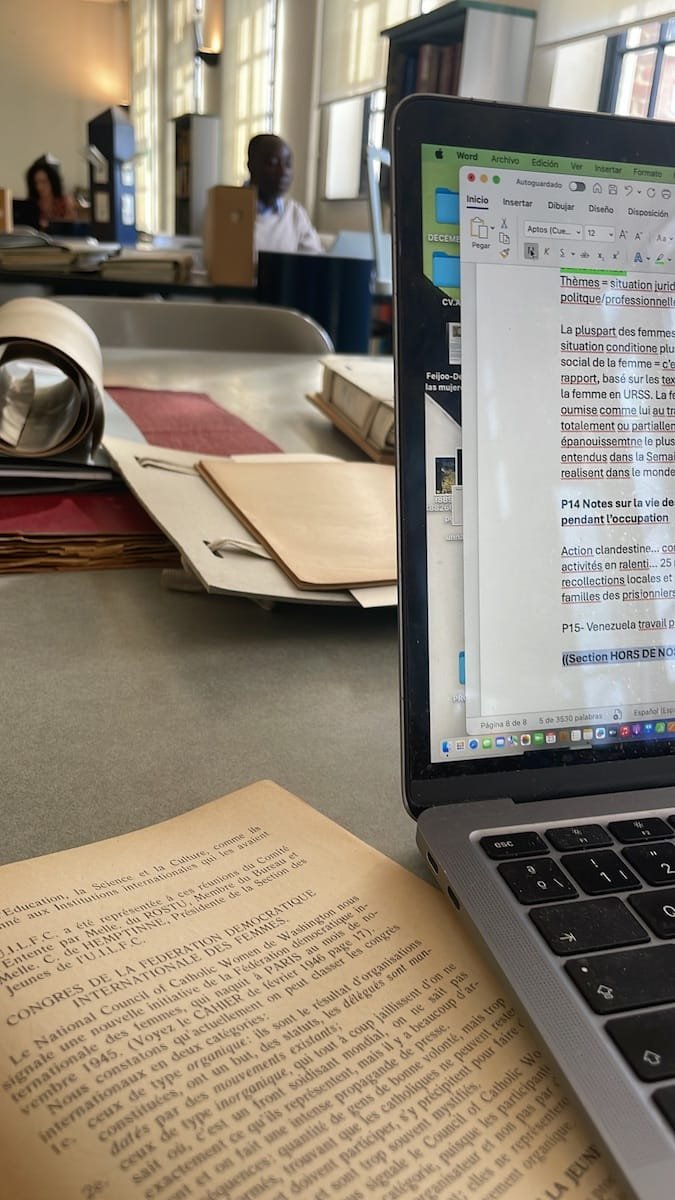
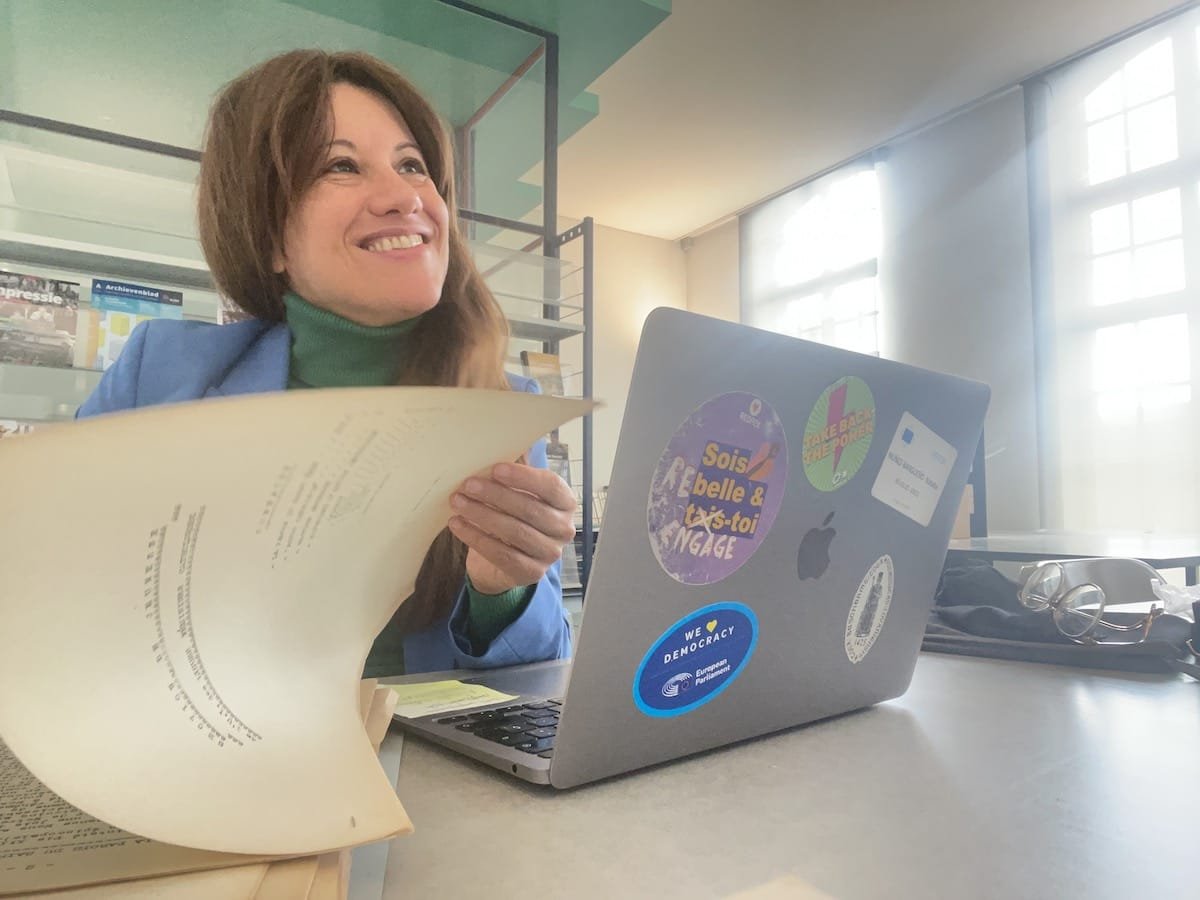
The exhibition is based on extensive research conducted at KU Leuven, drawing in particular on the rich collections of the Interfaculty Documentation and Research Centre on Religion, Culture and Society at KU Leuven-KADOC (and notably the Christien de Hemptinne archive) and the Maurits Sabbe Library, as well as on research carried out in Archivio Storico della Segreteria di Stato, Archivio apostolico vaticano, Istituto per la storia dell’Azione cattolica e del movimento cattolico in Italia Paolo VI (*) and Archivo de la Acción Católica Española de la Universidad Pontificia de Salamanca (ACE-UPSA). It brings together a wide range of primary documents, many of which are rarely displayed, offering visitors direct access to the archival traces of women’s international action.
Click on the image to enlarge
The project has been developed with the support of the Faculty of Theology and Religious Studies, the Faculty of Arts, and KADOC, and forms an integral part of TheoFem’s broader research agenda on gender, religion, expertise, and international networks.
Click on the image to enlarge
Seven thematic panels
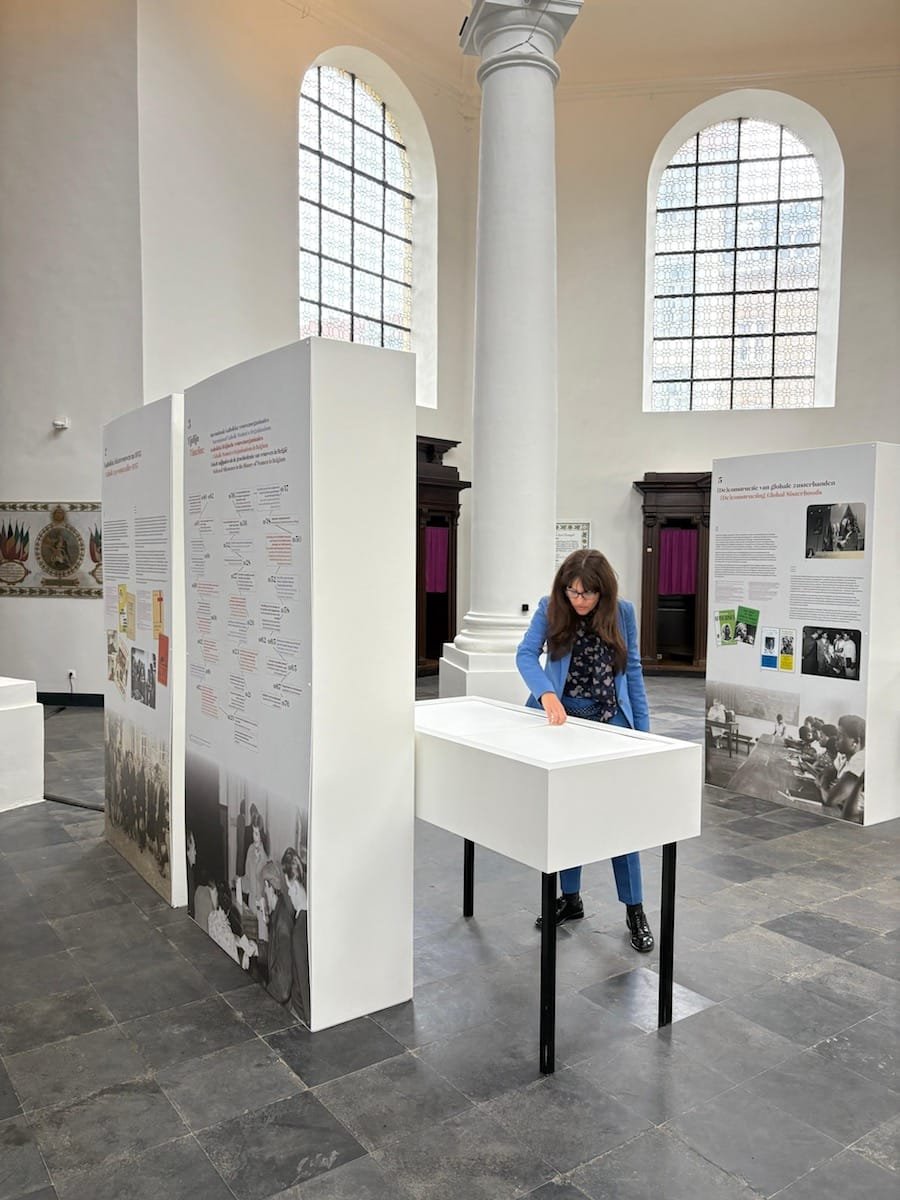
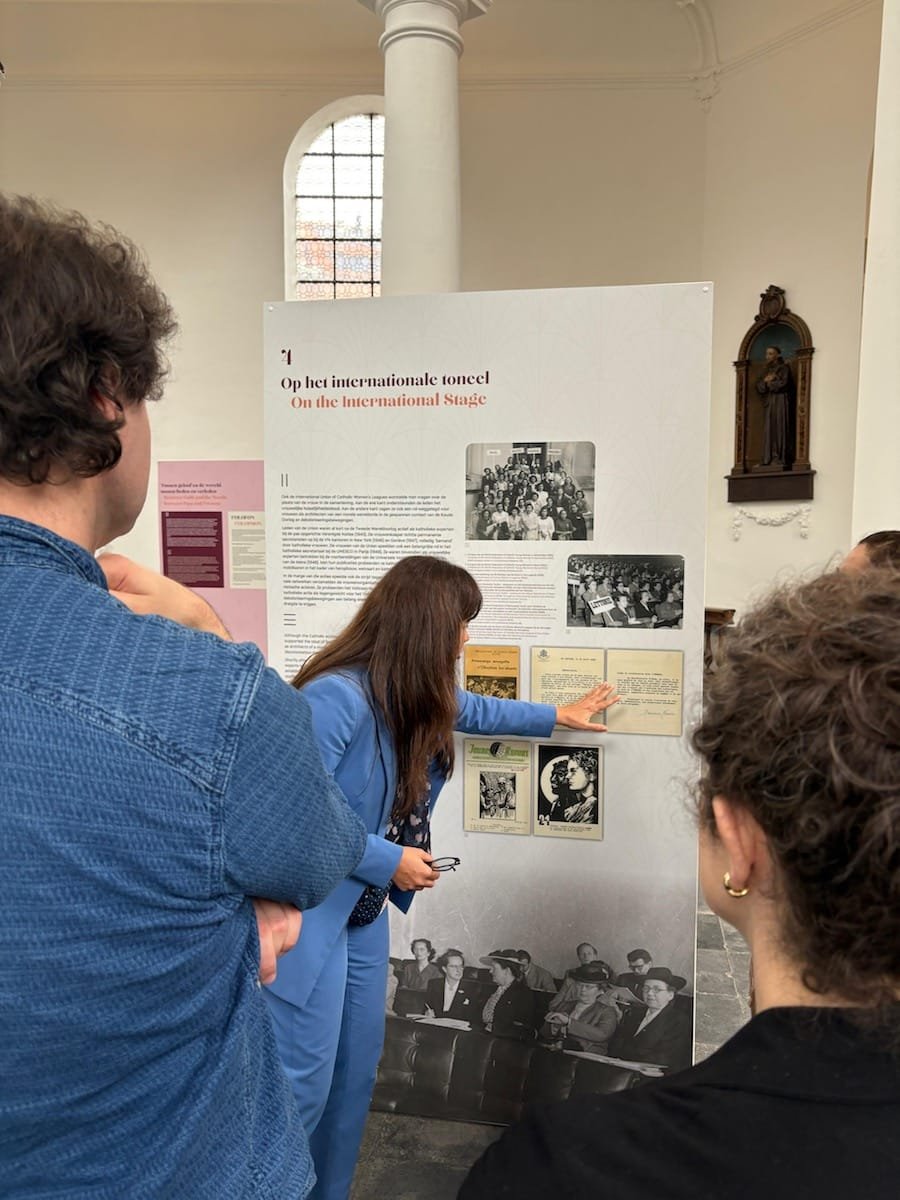
The exhibition is structured around seven thematic panels:
- Protagonists (women with eleadership posts at the World Union of Catholic Womens Orgasnisations (WUCWO)
- Christinne de Hemptinne: her life and her archive
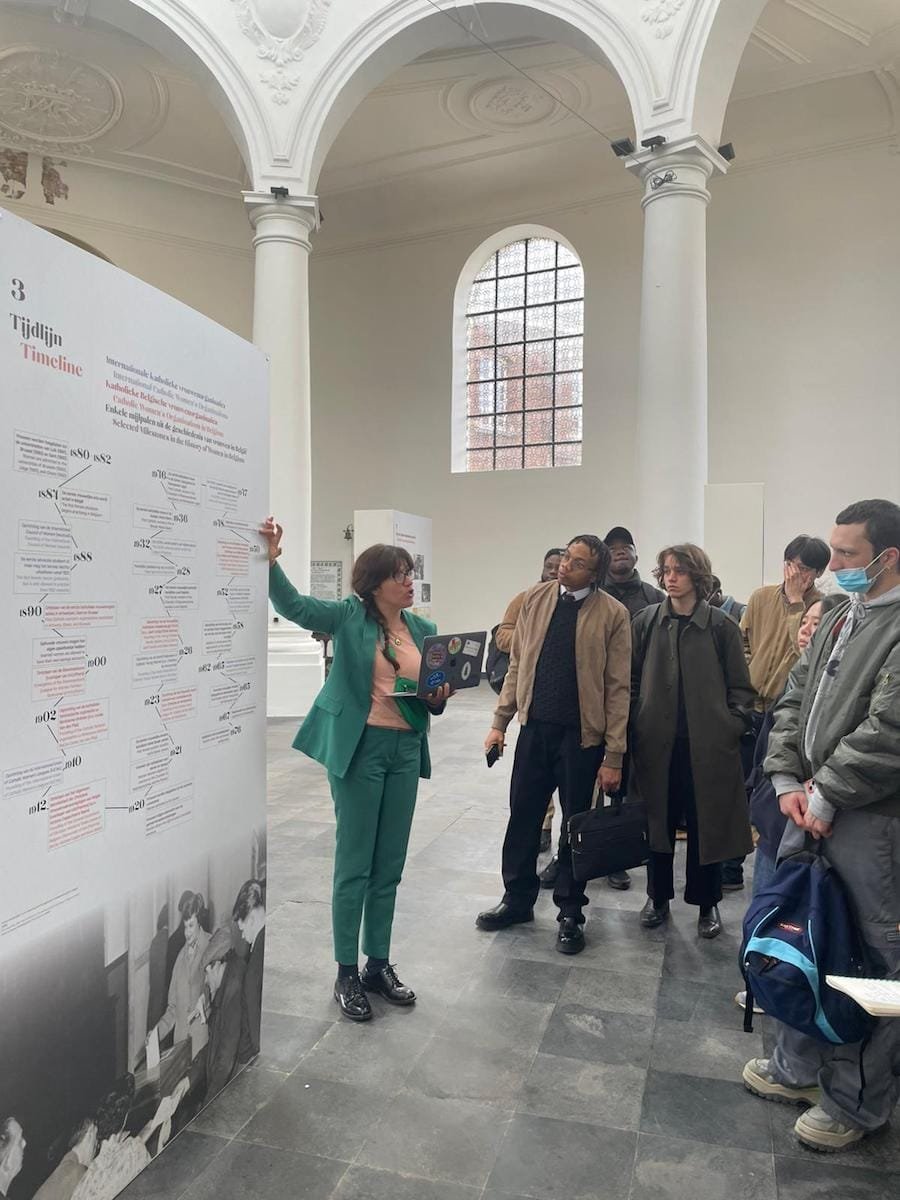
- Chronology: laywomen in internationalism (WUCWO), Catholic women, and key milestones in the history of women in Belgium
- Women after 1945 (The “domestic” Cold War)
- Laywomen on the international stage
- Deconstructing global sisterhoods
- Gender tensions
- Laywomen… discreet theologians?
Together, these panels trace the emergence of Catholic laywomen as international actors, explore tensions between gender norms and political engagement, and question the boundaries between activism, expertise, and theology.
A living exhibition
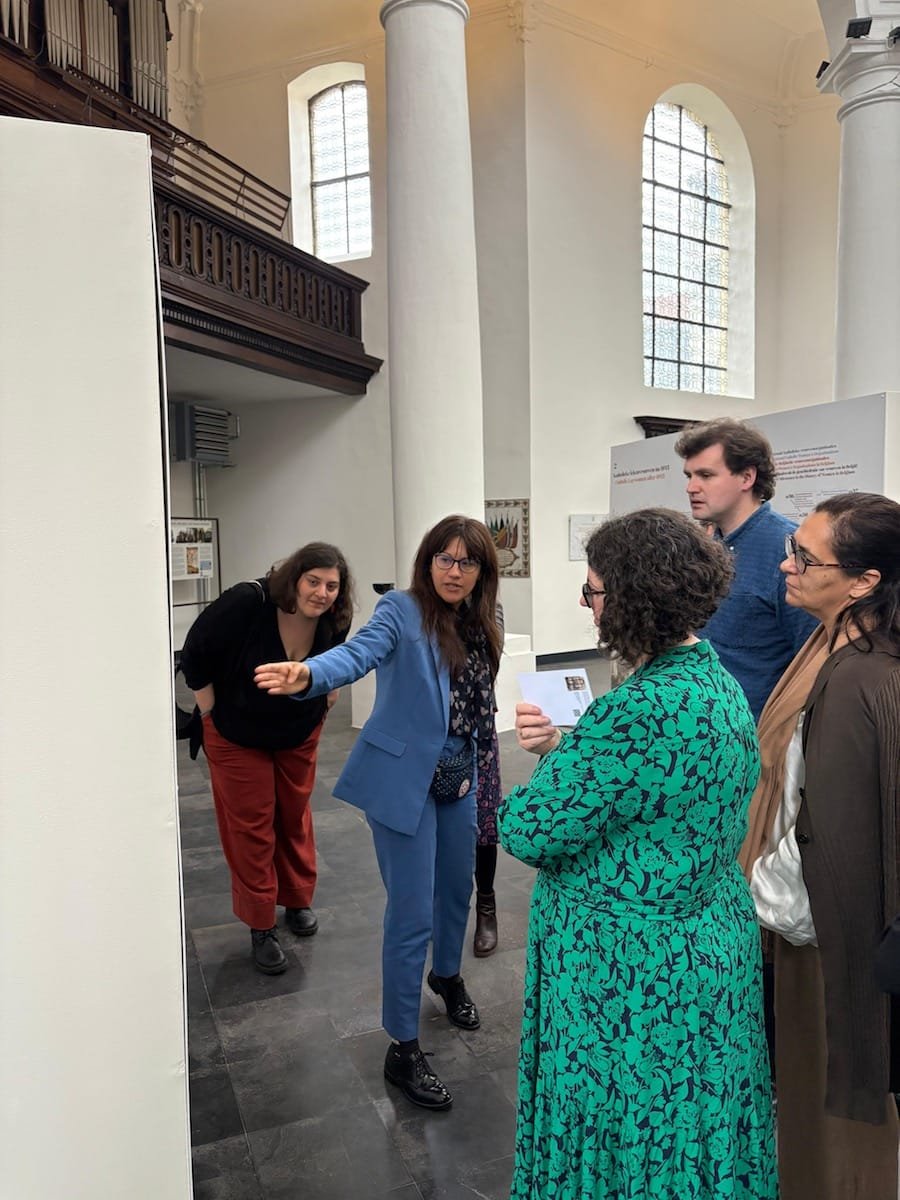
The exhibition has already been accompanied by several guided visits, including tours for participants in the international expert seminar Reframing the History of International Organizations, for classes from the Faculty of Theology and Religious Studies, and for students and members of the wider KU Leuven community. These visits have fostered dialogue across disciplines and generations, reinforcing the exhibition’s role as a space for collective reflection.
A further guided visit is scheduled for 3 May. Interested visitors are invited to contact KADOC directly or the curator of the exhibition.
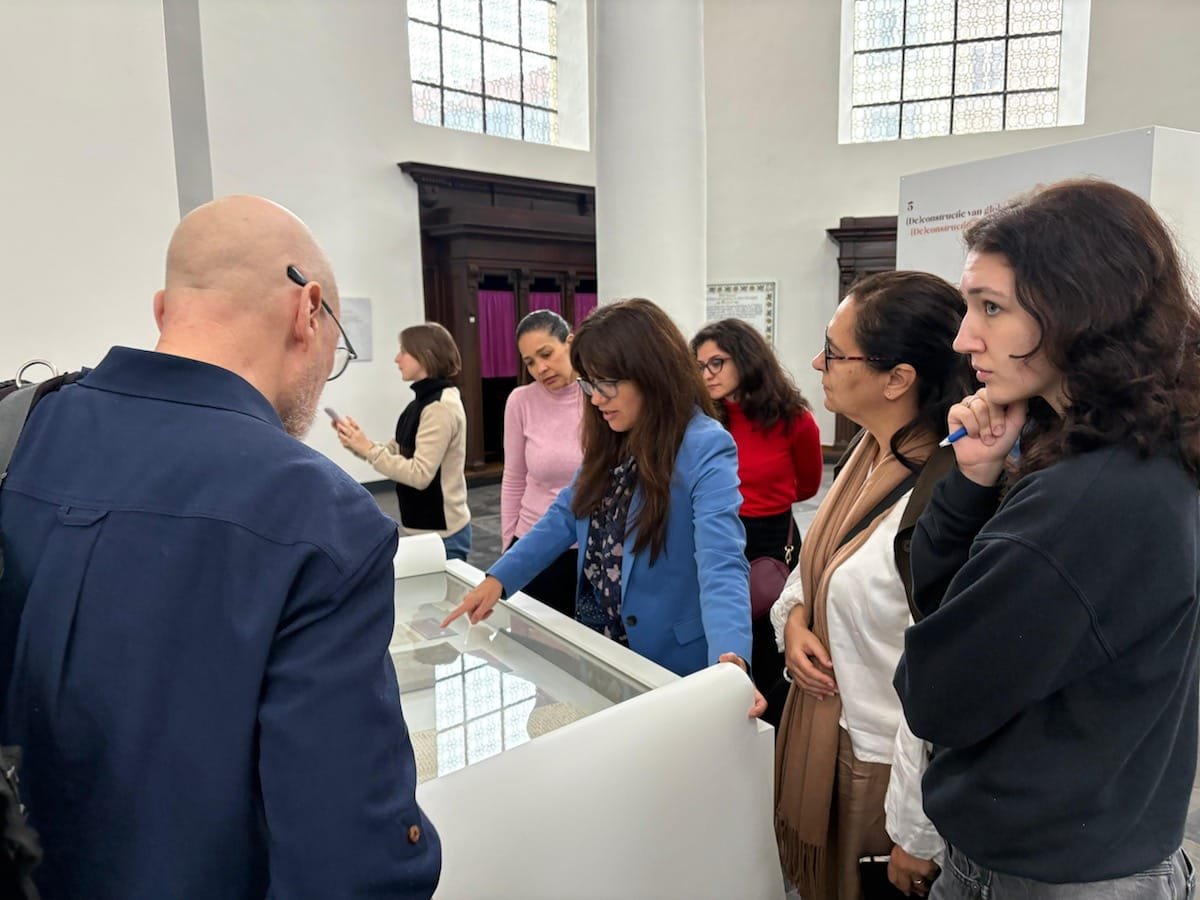
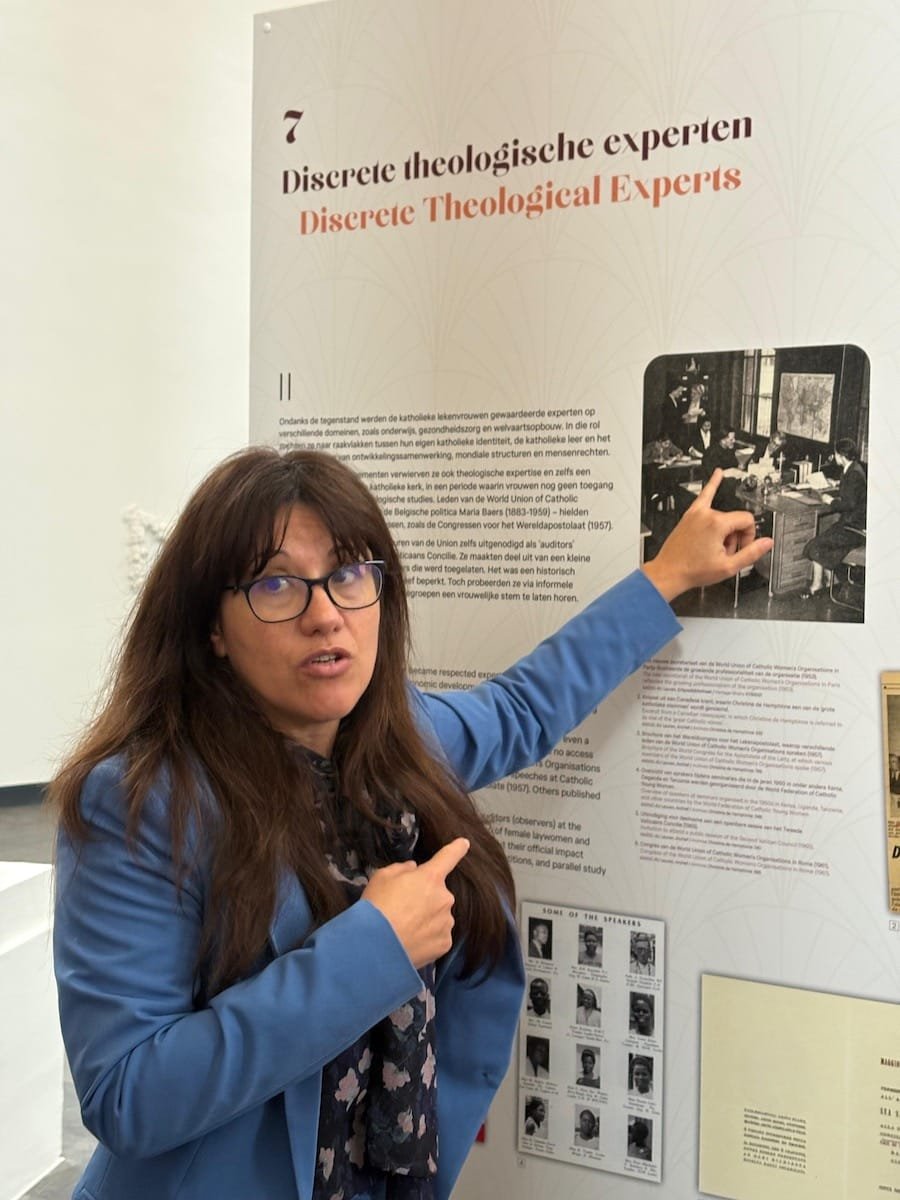
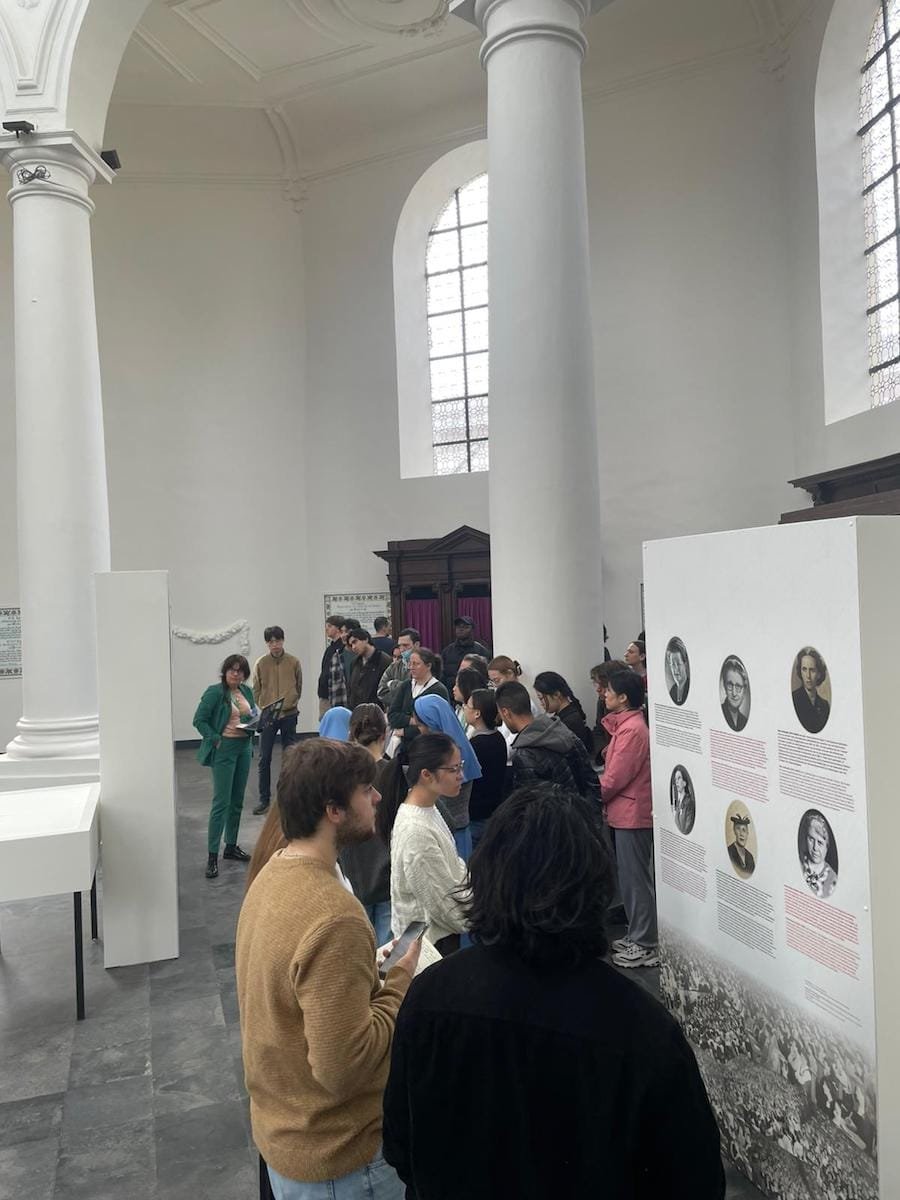
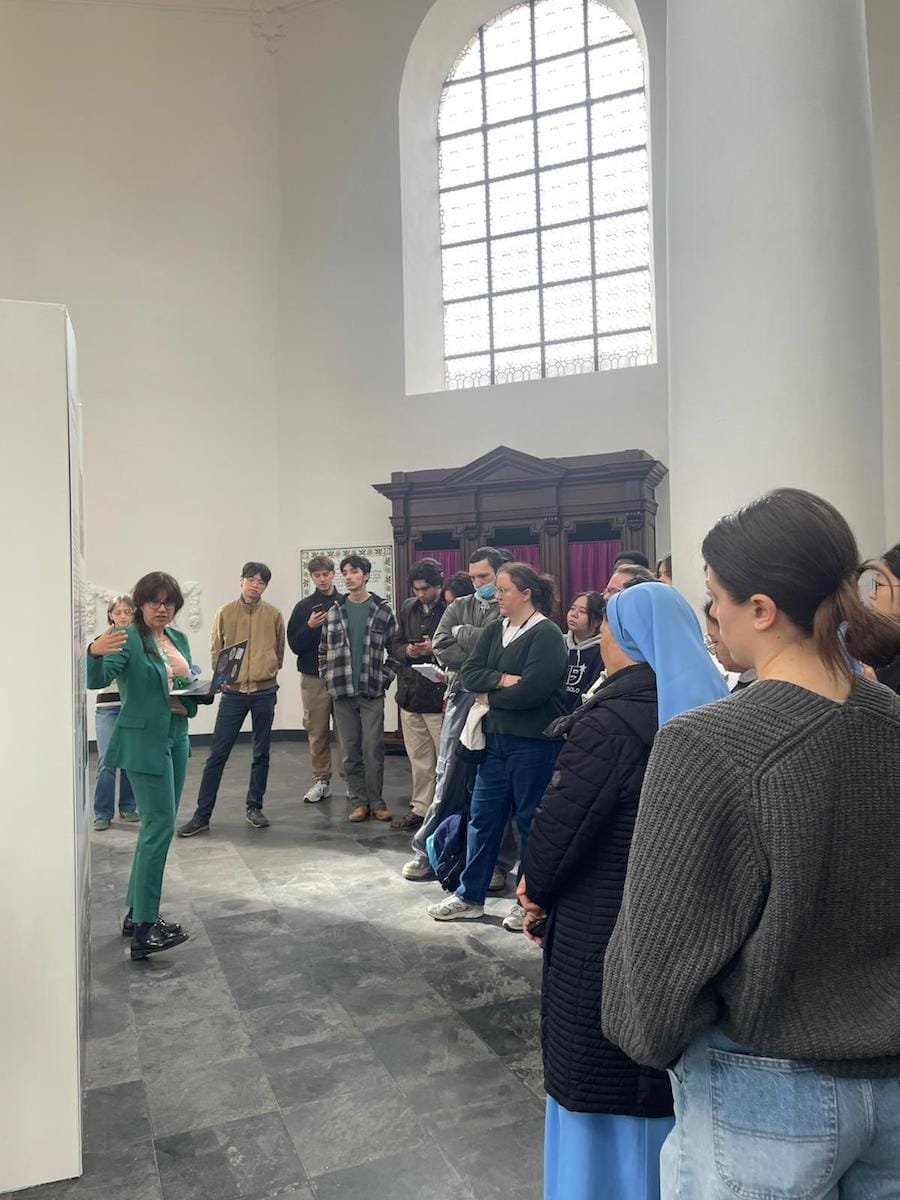
Click on the image to enlarge
Travelling Beyond Leuven
Conceived as a travelling project, the exhibition will continue its life beyond Leuven.
An online version will soon be available on the TheoFem website, and discussions are currently underway for the exhibition to travel to universities in Alicante, Madrid and Salamanca (Spain), Milan and Rome (Italy), extending the conversation on women, religion, and internationalism across different European contexts.
Institutions interested in hosting the exhibition or adapting it to a local or archival context are invited to contact Dr. Natalia Núñez Bargueño via email or via the project’s Instagram account.
(*) Dr. Núñez Bargueño would like to acknowledge the support from the Ecole Française de Rome and the project GLOBALVAT. Reconstruire le monde, les sociétés et la personne humaine (1939-1958) : l’apport global des archives vaticanes for their kind support of a research stay in Rome that facilitated the preparation of this exhibition.