
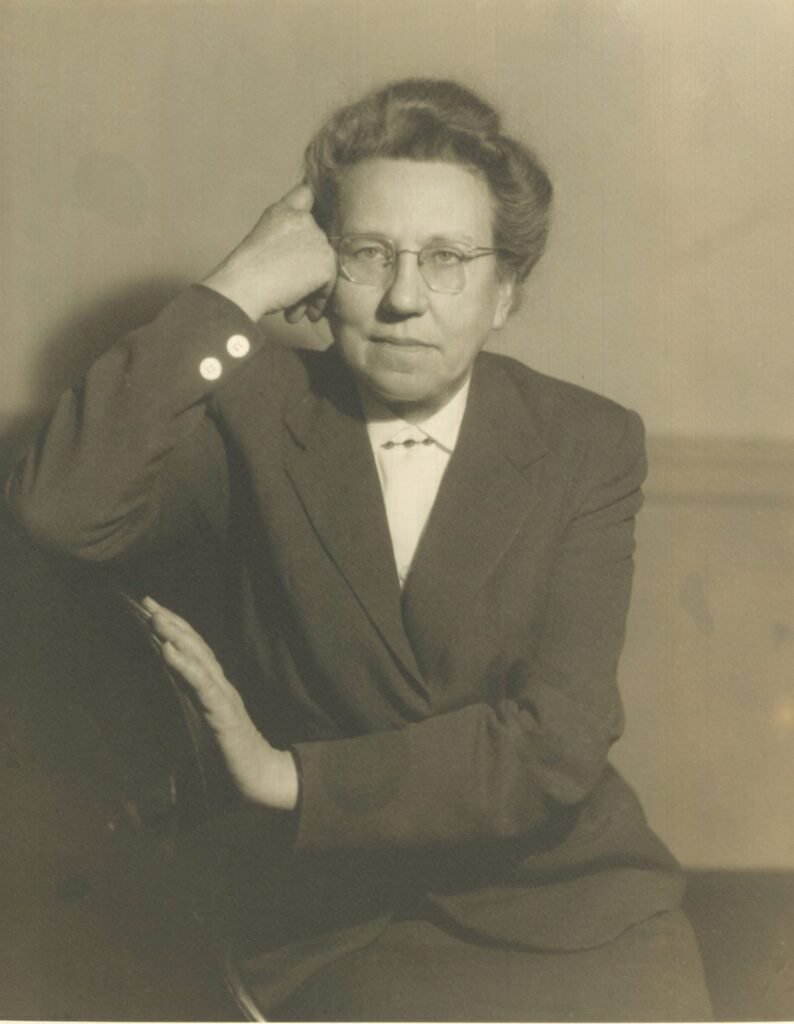
Christine de Hemptinne, portrait taken in New York. KADOC-KU Leuven, Photo collection: KFC299
<- Mouse above the image to enlarge
The decades following the Second World War are sometimes described in the history of women’s emancipation as the calm before the storm of the turbulent 1960s. Yet even before the May 1968 movement turned traditional gender roles and power relations upside down, women were already seeking new opportunities for self-development, influence, and self-determination.
This exhibition explores the largely unknown world of Catholic laywomen who, after the war, expanded their international work to multilateral arenas.
These women travelled the world, maintained contacts with the Vatican and the United Nations, and campaigned for development, and a Catholic understandingof women’s and human rights in the Western world and the Global South. At the same time, they continued to uphold the ideal of the woman at home: mother of the family and guardian of the faith.
One of the central figures in this story is Christine de Hemptinne (1895–1984). Born into an aristocratic Belgian family in Ghent, she became an important protagonist in the global Catholic women’s movement (see panel 3). Her rich archival legacy provides an ideal starting point for illustrating the story of Catholic women on the international stage.