
<- Mouse above the image to enlarge
Despite persistent resistance, Catholic laywomen came to be recognised as respected experts in a range of fields, including education, healthcare, and social and economic development. In these roles, they actively sought points of convergence between their Catholic identity, Catholic teaching, and the growing importance of development cooperation, global governance, and human rights in the postwar world.
Through their actions and sustained engagement, these women acquired theological expertise and even a certain degree of authority within the Catholic Church at a time when women were still excluded from full theological studies. Members of the World Union of Catholic Women’s Organisations, such as the Belgian politician Maria Baers, delivered speeches at major Catholic gatherings, including the World Congresses of the Lay Apostolate (1957), while others published texts reflecting on theological and social questions.
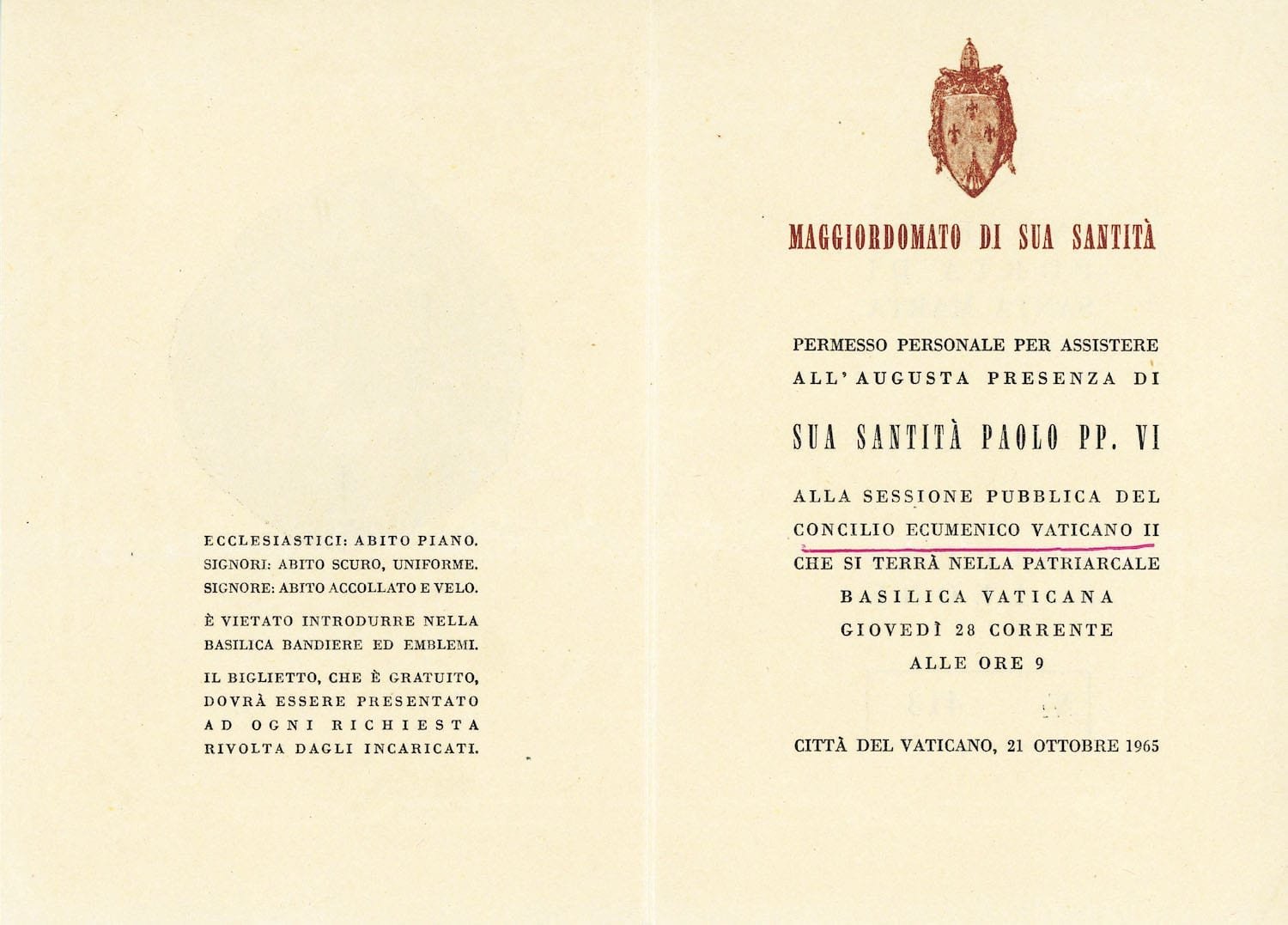
In 1964, several women leaders of International Catholic Organisations, including the Spaniard Pilar Bellosillo, President of the WUCWO, were invited to attend the Second Vatican Council as auditors (observers). They formed part of a very small group of laywomen and women religious granted access to the Council’s proceedings, making this a historically significant moment. Although they were denied the right to speak in plenary and other formal sessions, they participated actively in parallel study groups. Through this work, as well as through informal conversations and petitions, they left a discernible imprint on the Council’s deliberations and on the drafting of its principal documents.
Photographs:
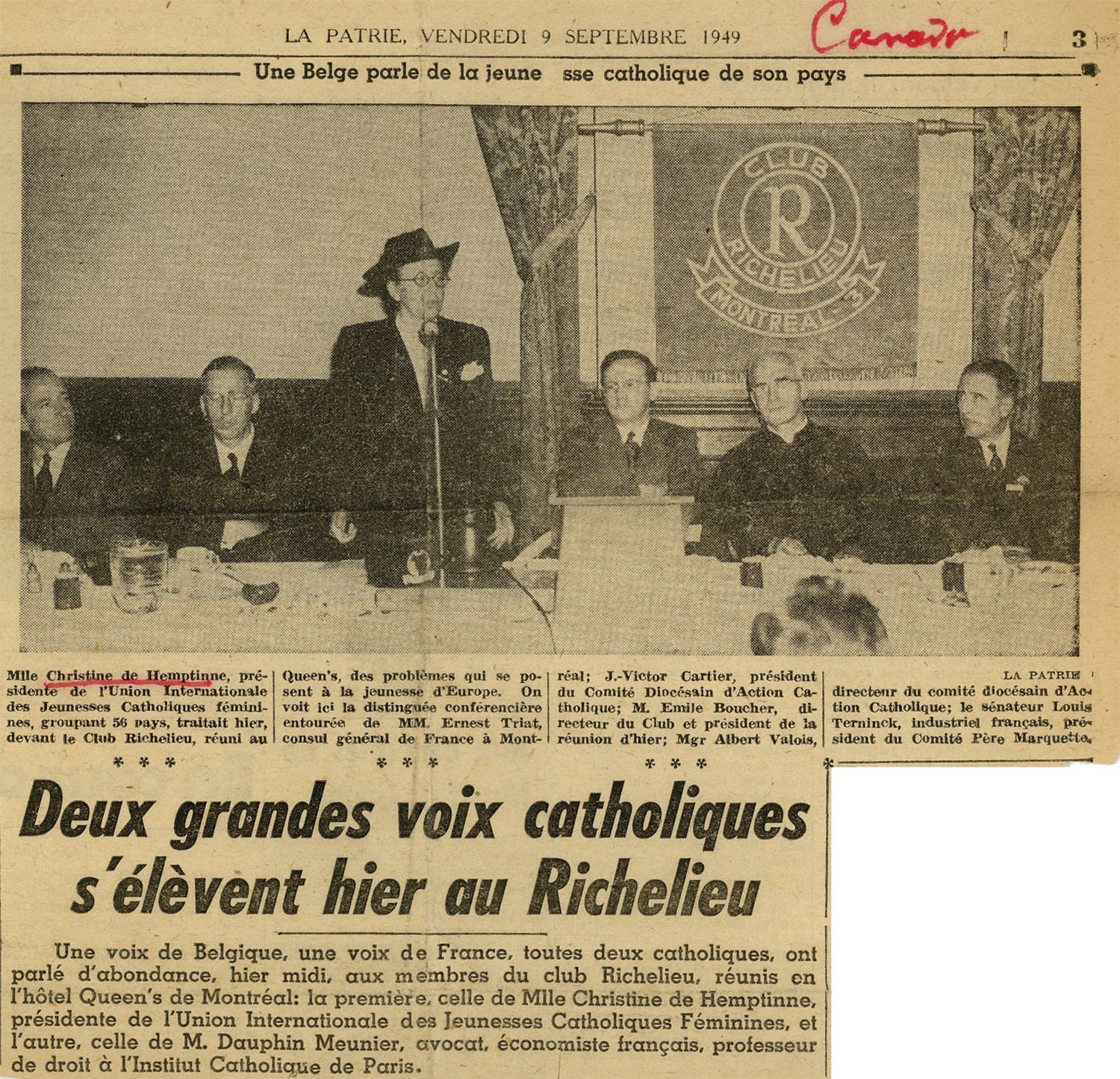
1. Excerpt from a Canadian newspaper, in which Christine de Hemptinne is referred to as one of the ‘great Catholic voices’. KADOC-KU Leuven, Archives Christine de Hemptinne: 532
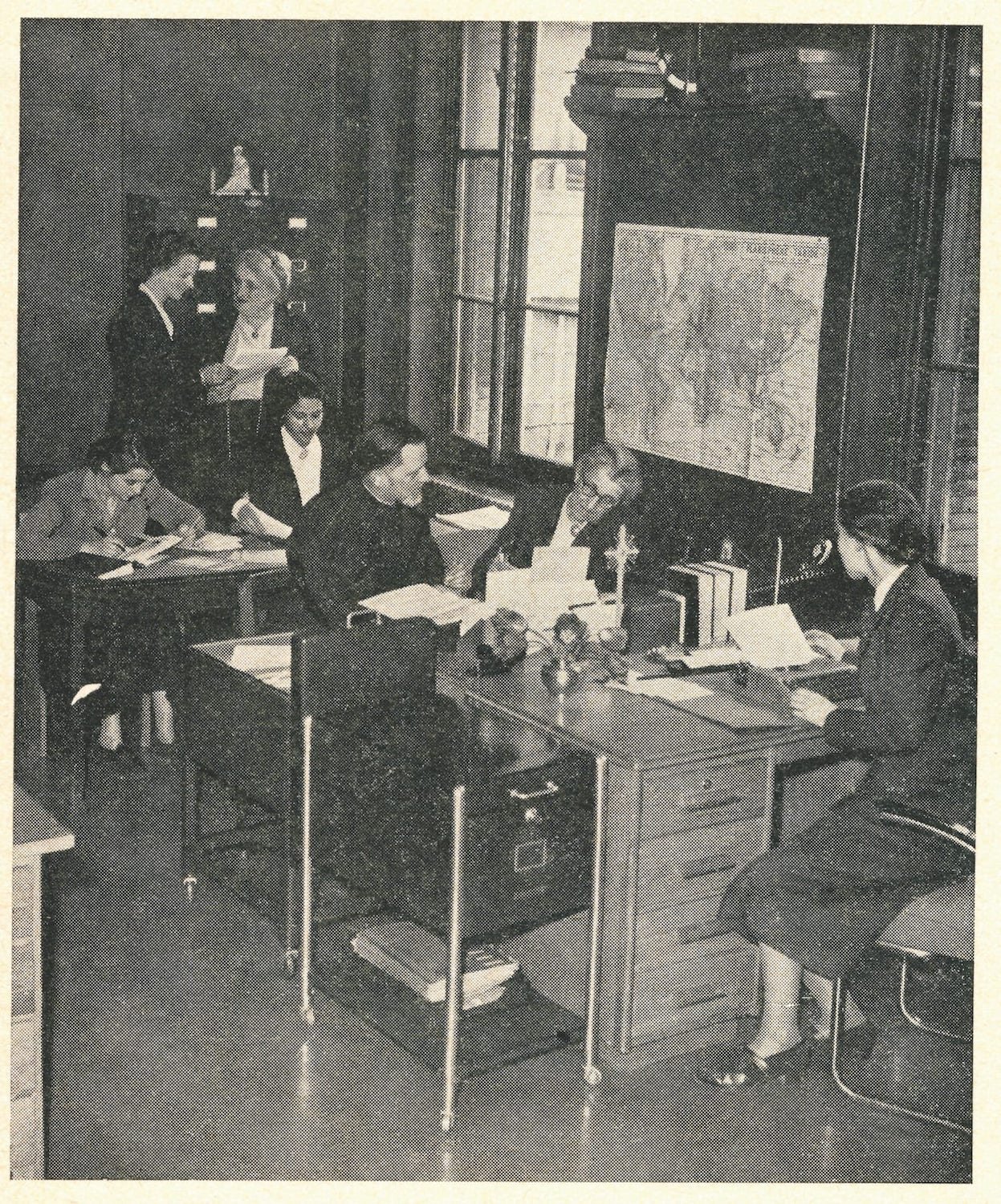
2. The new secretariat of the World Union of Catholic Women’s Organisations in Paris reflected the growing professionalism of the organisation (1953). KADOC-KU Leuven, Heritage Library: KYB2021
3. Invitation to attend a public session of the Second Vatican Council (1965). KADOC-KU Leuven, Archives Christine de Hemptinne: 740
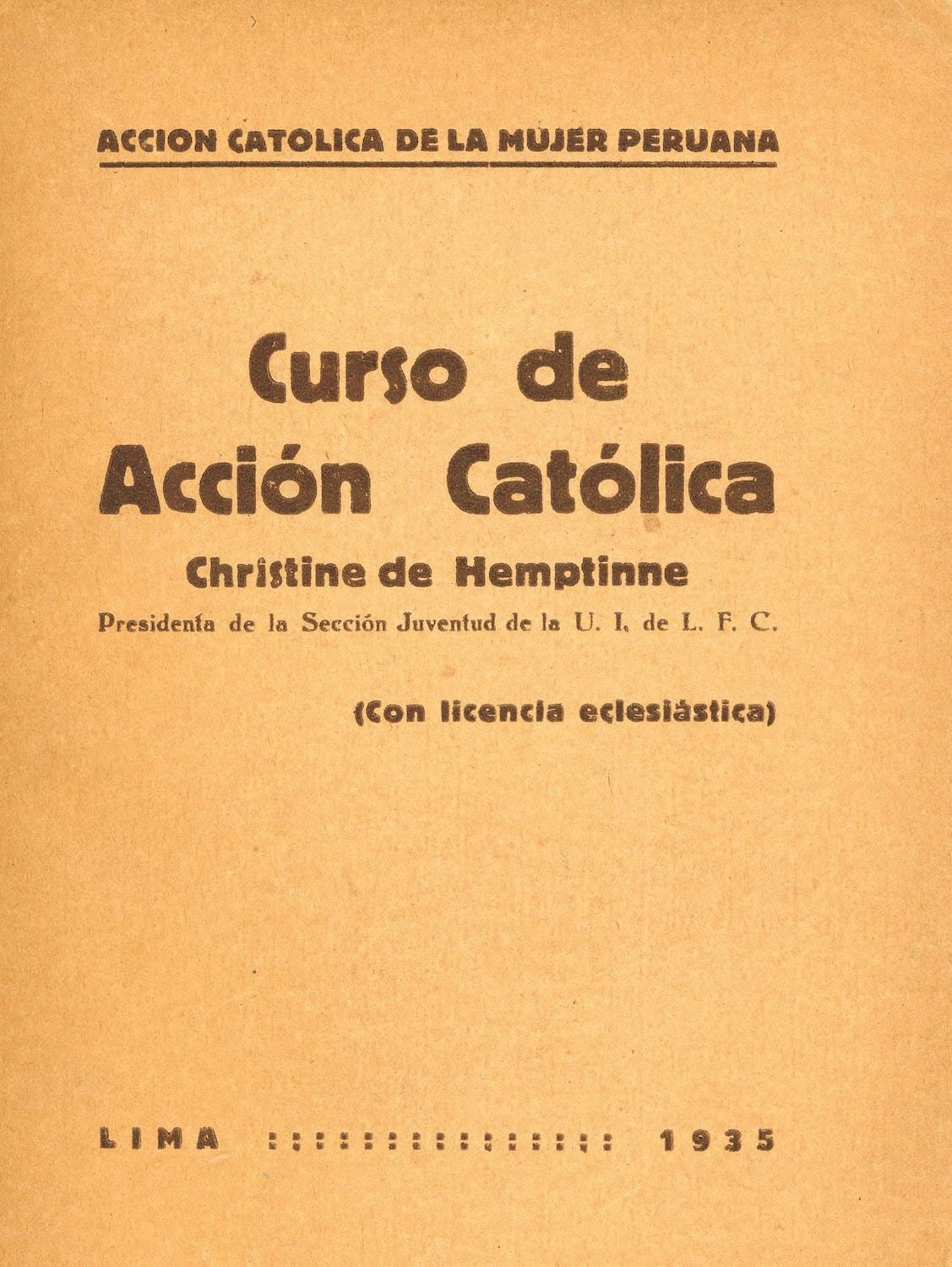
4. Spanish‑language publication (Peruvian print) on the nature and activities of Catholic Action, to whose consolidation Christinne de Hemptinne contributed significantly (particularly through its female youth branch) in Latin America during the 1930s. In this context, she was cited and mobilised as an authoritative voice on the subject.
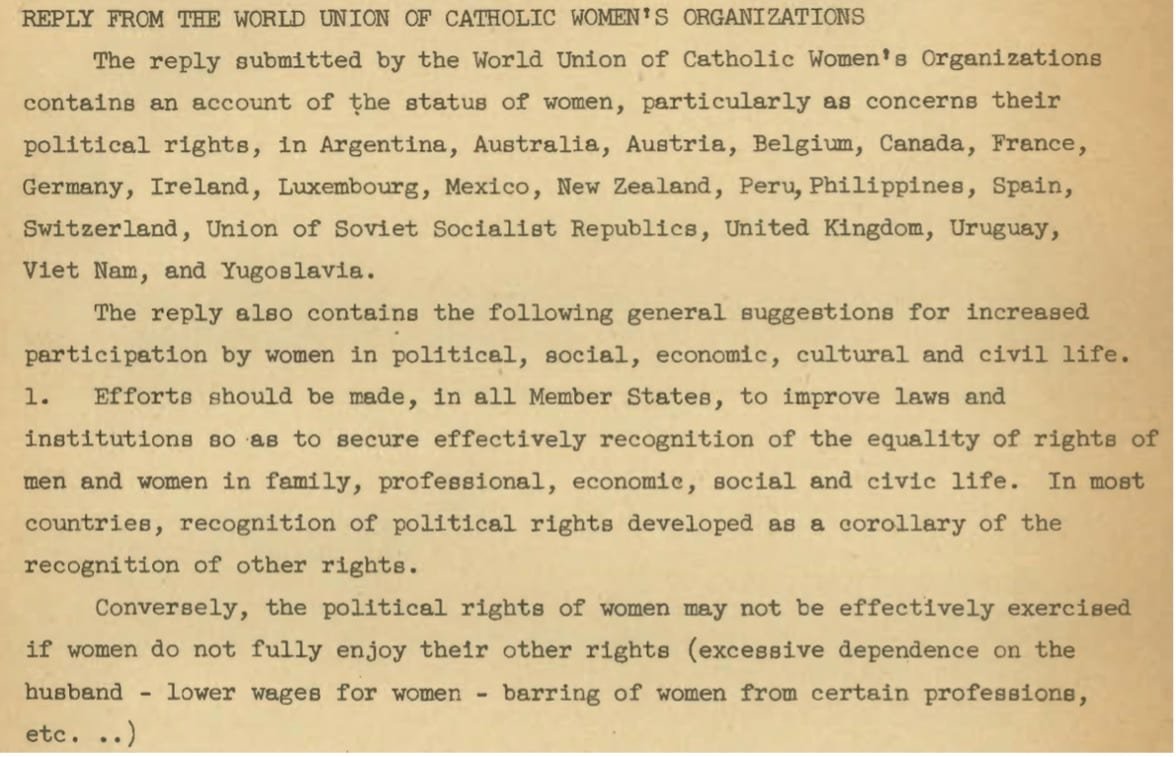
5. Extract from the 8th Session of the United Nations Commission on the Status of Women Memorandum by the Secretary General 3 February 1954 (United Nations Digital Library System)