
<- Mouse above the image to enlarge
Ambiguous relationships with women from the Global South were not the only source of tension. The women of the World Union of Catholic Women’s Organisations also ventured into domains that had traditionally been reserved for men. Within the Church, in secular society, and in the world of international diplomacy, they constantly had to navigate between submission and action, humility and assertiveness, tradition and innovation, theology and secular knowledge. While they were supported by some influential men within the Catholic hierarchy, they also encountered significant resistance.
In this context, the Union nevertheless succeeded in achieving several important breakthroughs. The women-led permanent secretariat of Catholic information at the United Nations in Geneva was established despite certain mistrust on the part of key members of the Hierarchy and the Curia. In 1949, for example, during the third session of the Commission on the Status of Women (CSW), held in Beirut in 1949, members of the Union defended the equality of women and men within marriage, an intervention that provoked criticism from some ecclesiastical circles in Rome. Among other things, following the evaluation of the declaration by two Jesuits from La Civiltà Cattolica and the Pontifical Lateran University (Fathers Messineo and Lener respectively), an official from the Vatican Secretariat of State expressed concern that the Union’s ideas and proposals “did not sufficiently emphasise the specific role of women, which, according to nature and Catholic doctrine, consists in motherhood and the care of the family.”
Photographs:
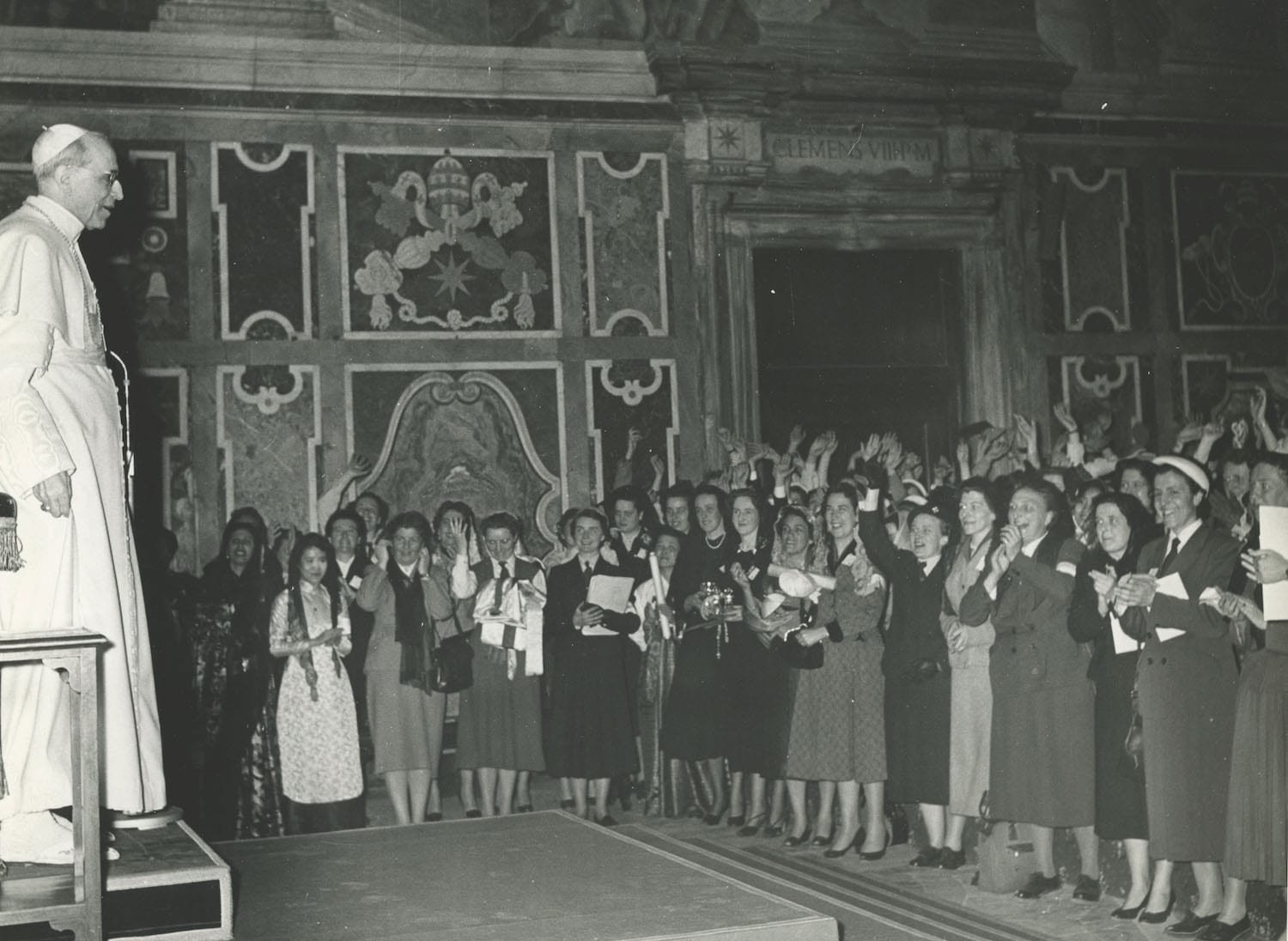
1. Audience with Pope Pius XII during an international conference in Rome (1957). KADOC-KU Leuven, Archives Christine de Hemptinne: 995
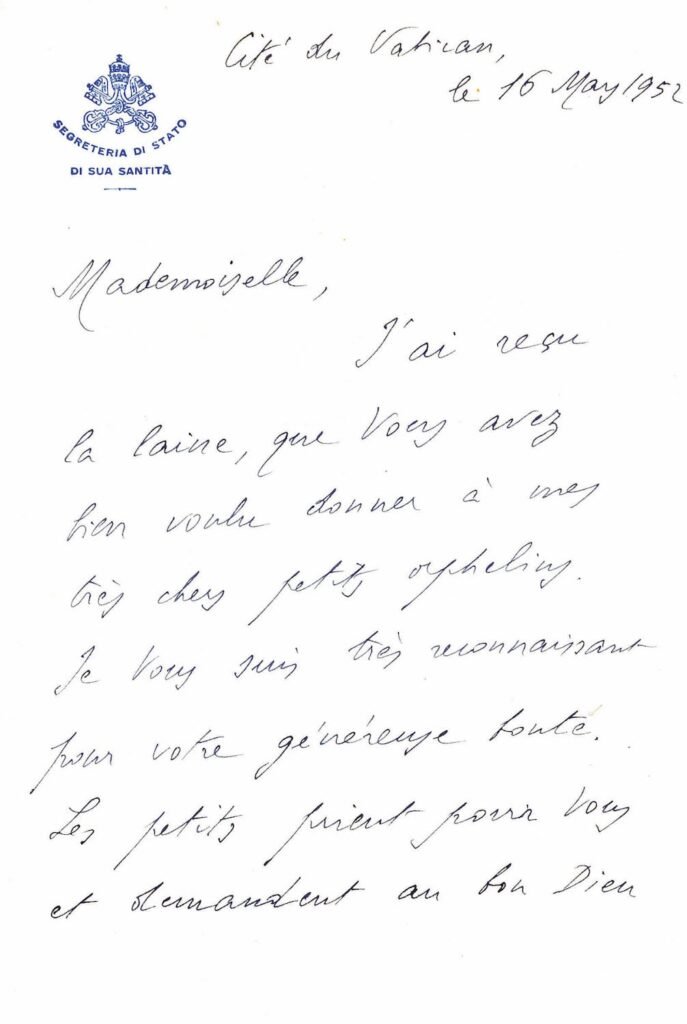
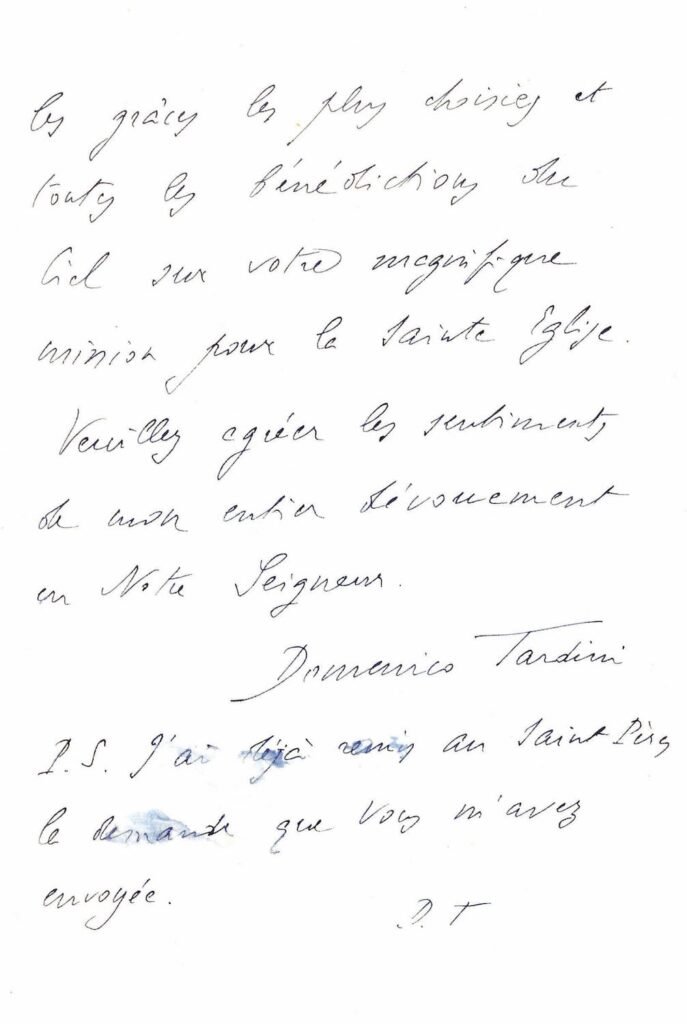
2. and 3. Letter from Domenico Tardini, the Secretary of State of the Vatican, to Christine de Hemptinne (1952). Despite hierarchical gender relations in the church, the letter also conveys proximity and a respectful friendship. KADOC-KU Leuven, Archives Christine de Hemptinne: 791
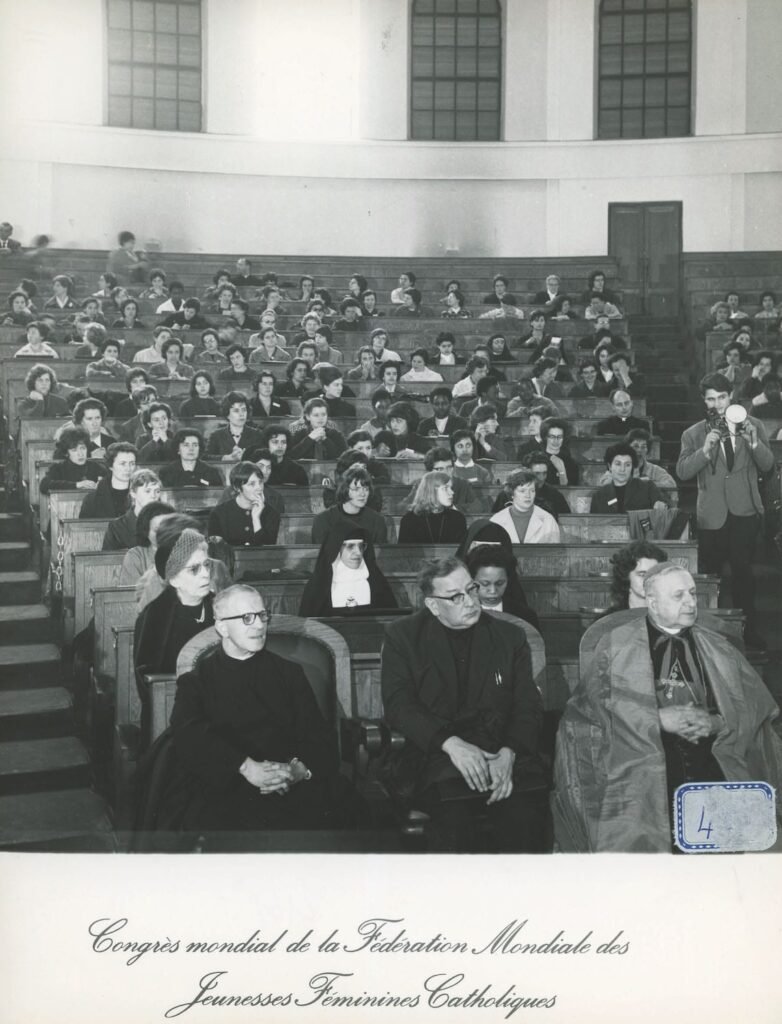
4. Congress of the World Federation of Catholic Young Women in Rome, with male clergy prominently seated in the front row and a large group of women positioned ‘modestly’ behind them (1964). KADOC-KU Leuven, Photo collection: 131
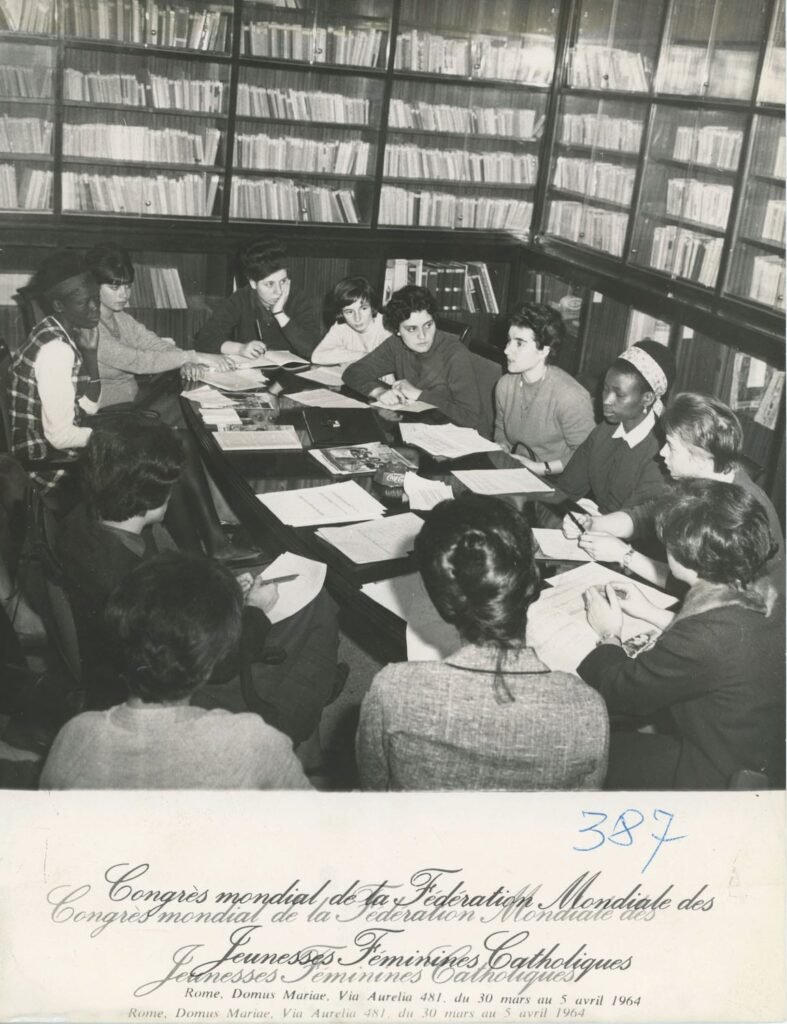
5. A working group, during the congress of the World Federation of Catholic Young Women in Rome. Since at least the late 1940s, during large congresses, women gathered in parallel sessions and working groups known as “carrefours”, where they were able to discuss key social, political, and religious issues without male supervision (1964). KADOC-KU Leuven, Archives Christine de Hemptinne: 1012
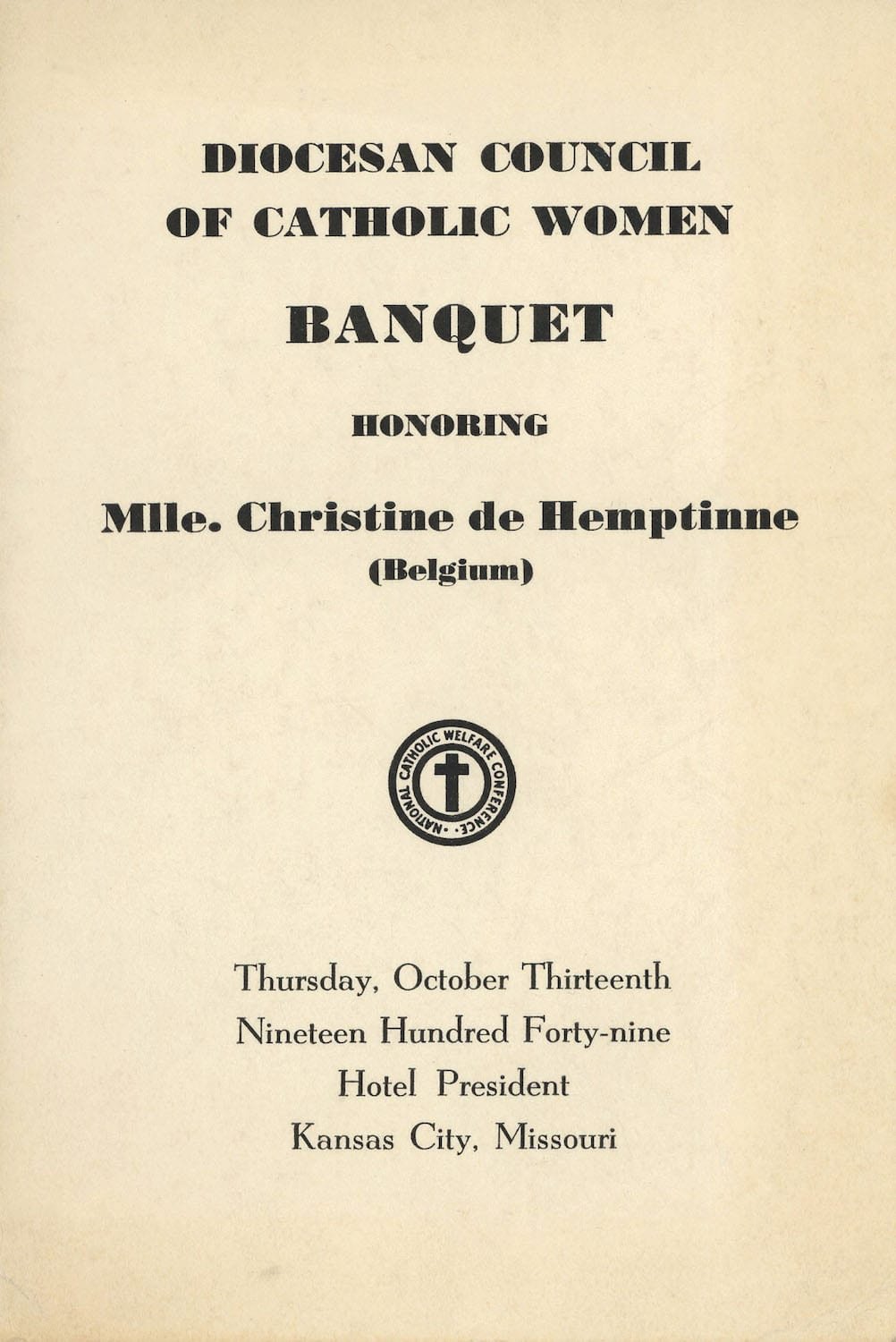
6. Invitation to a banquet in honour of Christine de Hemptinne in Kansas City (1949). As president of the World Federation of Catholic Young Women, she was often praised for her dedication. KADOC-KU Leuven, Archives Christine de Hemptinne: 532
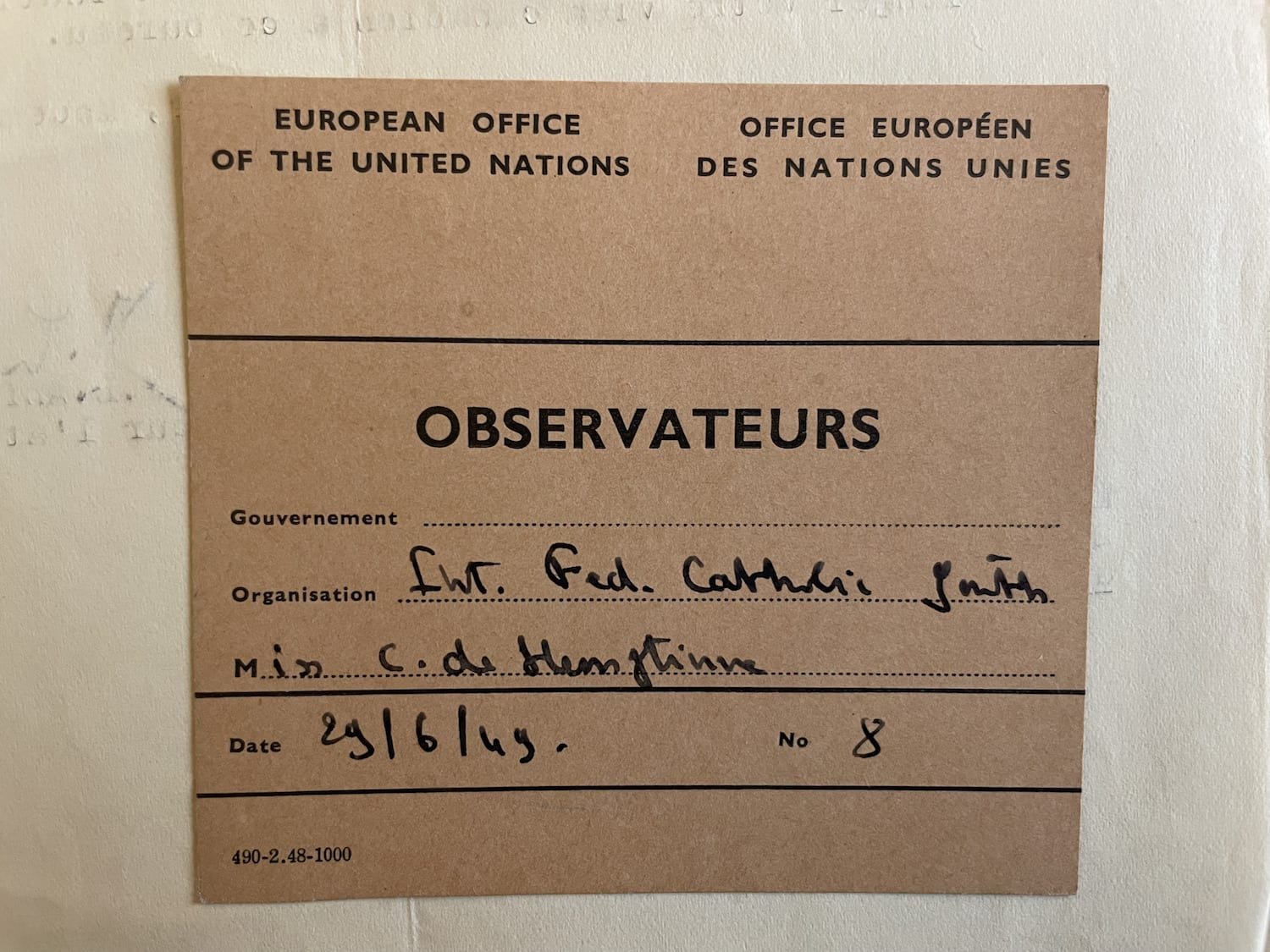
7. KADOC-KU Leuven, Archives Christine de Hemptinne: 924