
<- Mouse above the image to enlarge
Although the Catholic women of the International Union of Catholic Women’s Leagues (IUCWL) supported the ideal of female domesticity, they also envisioned a role for women as architects of a moral world order within the tense context of the Cold War and decolonisation movements.
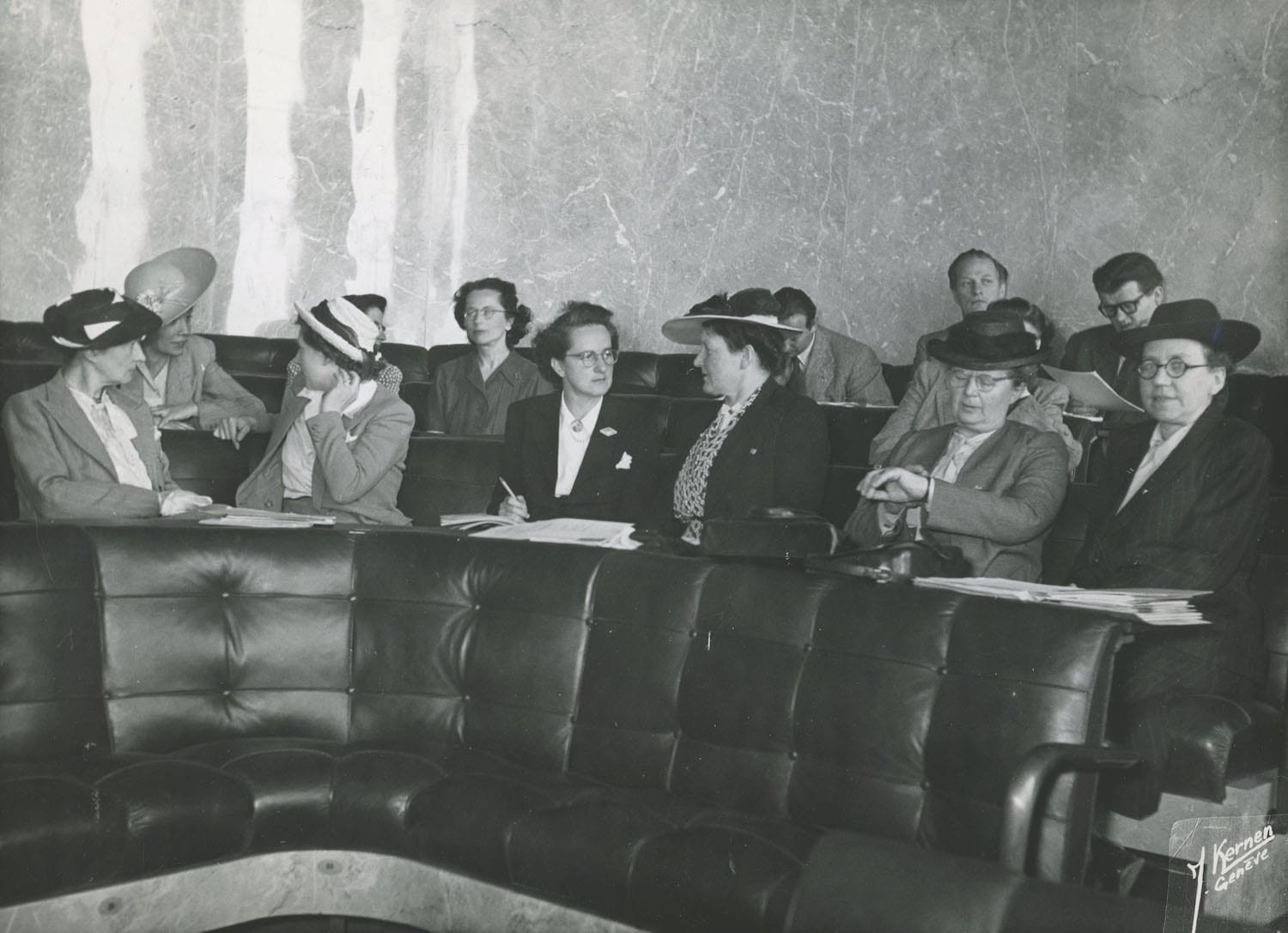
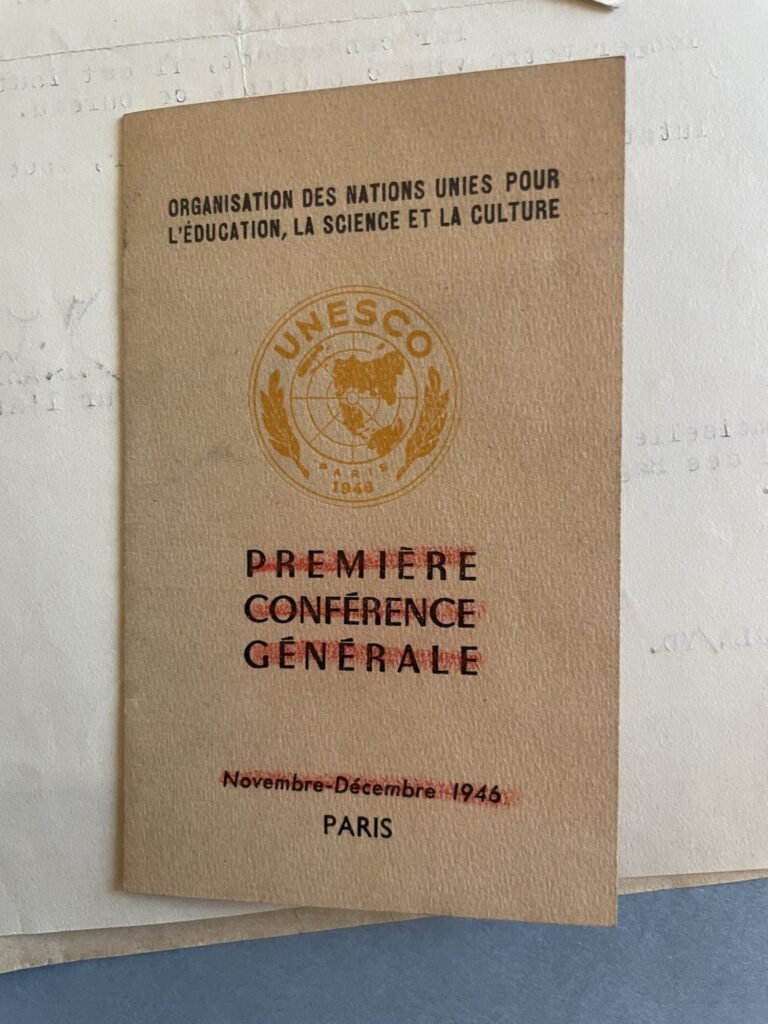
Shortly after the Second World War, members of the IUCWL were already active as Catholic experts within the newly founded United Nations (1945). They also led the two newly founded permanent secretariats of information at the UN in New York (1946, Catherine Schaeffer) and Geneva (1947, Edwige de Romer), staffed entirely by women. They were also involved in the Catholic secretariat at UNESCO, founded in Paris in 1948. As Catholic female experts, they contributed to the preparations of the Universal Declaration of Human Rights (1948). Through their publications, they sought to mobilise Catholic women worldwide in support of post‑war reconstruction, prosperity, and the spread of the Catholic faith.
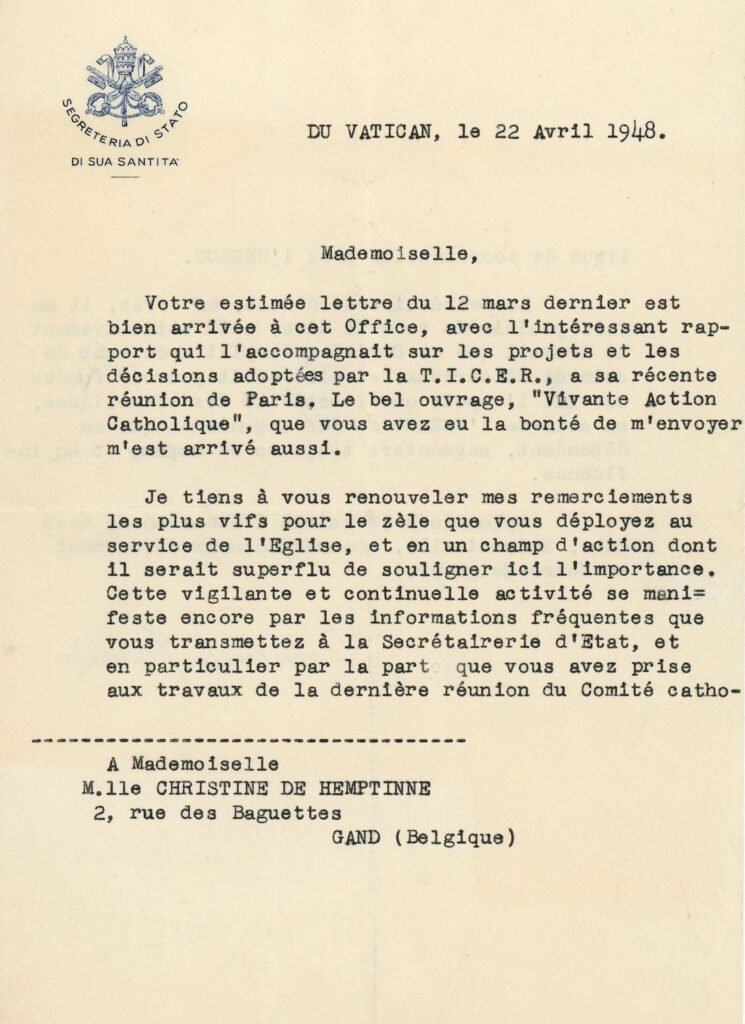
Alongside these efforts, the struggle against communism also played an important role. Through their international networks, women’s organisations gathered valuable information on the activities of communist actors worldwide. They attempted to convince the Vatican of the importance of female Catholic action as a counterweight to the “red threat,” particularly in the Global South, where decolonisation movements were gaining momentum and communism threatened to gain a foothold.
Photographs:
1. A group of women from the Union of Catholic Women’s Leagues at the United Nations in Geneva (1948). On the right sits Christine de Hemptinne. KADOC-KU Leuven, Archives Christine de Hemptinne: 994
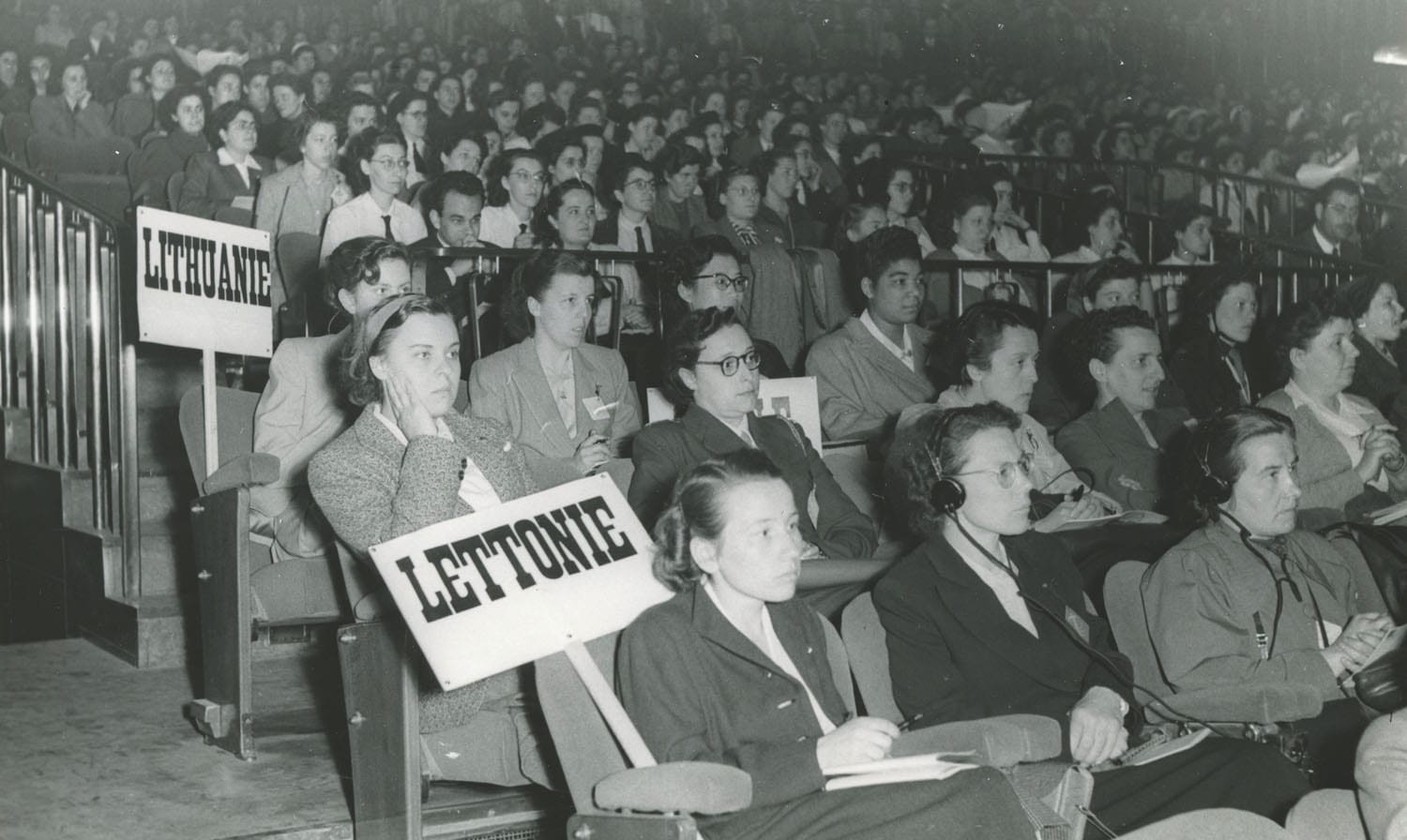
2. Congress of the World Federation of Catholic Young Women in Rome (1952). KADOC-KU Leuven, Archives Christine de Hemptinne: 1019
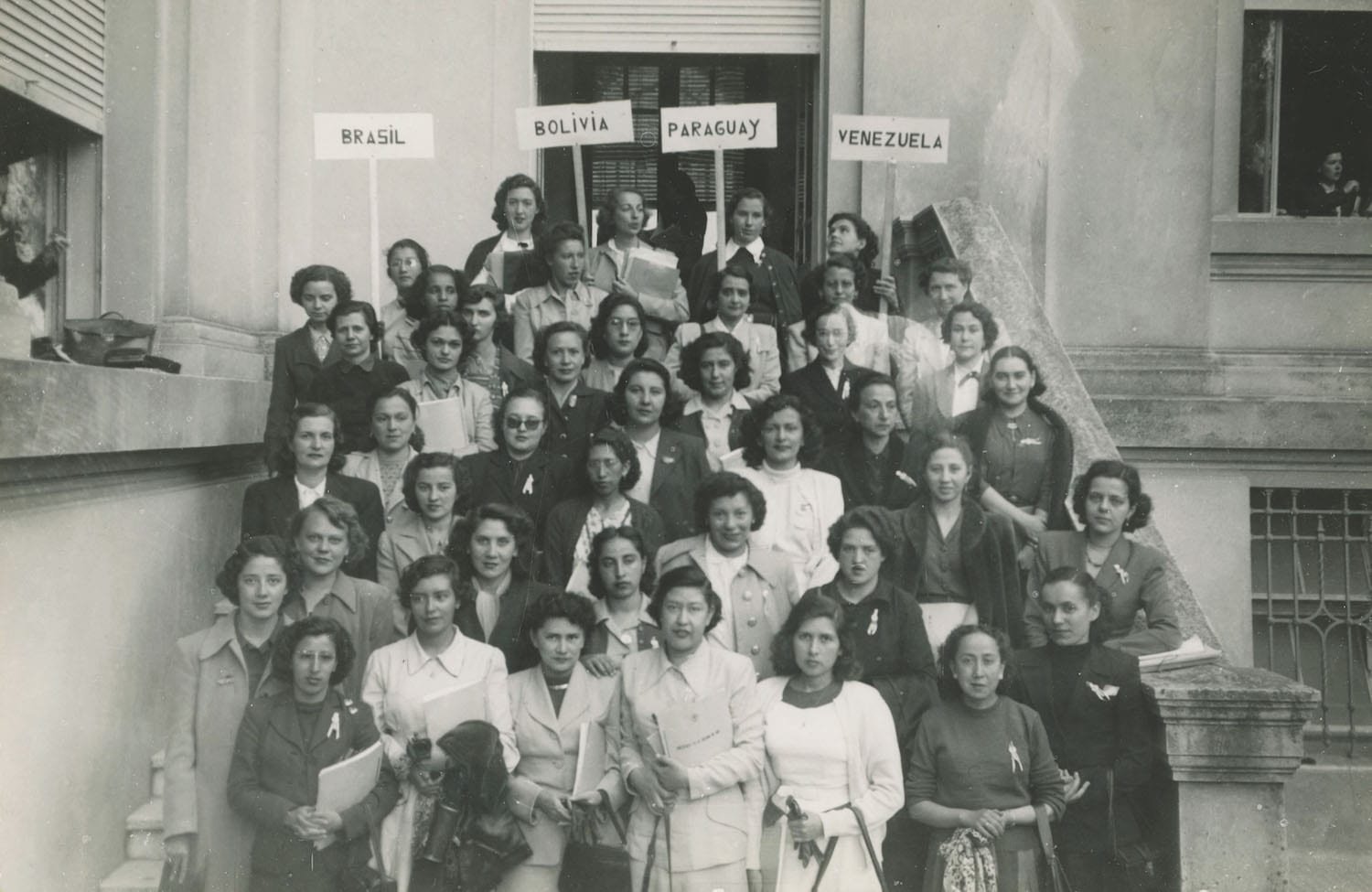
3. Congress of the de World Federation of Catholic Young Women in Montevideo (1951). KADOC-KU Leuven, Archives Christine de Hemptinne: 1015
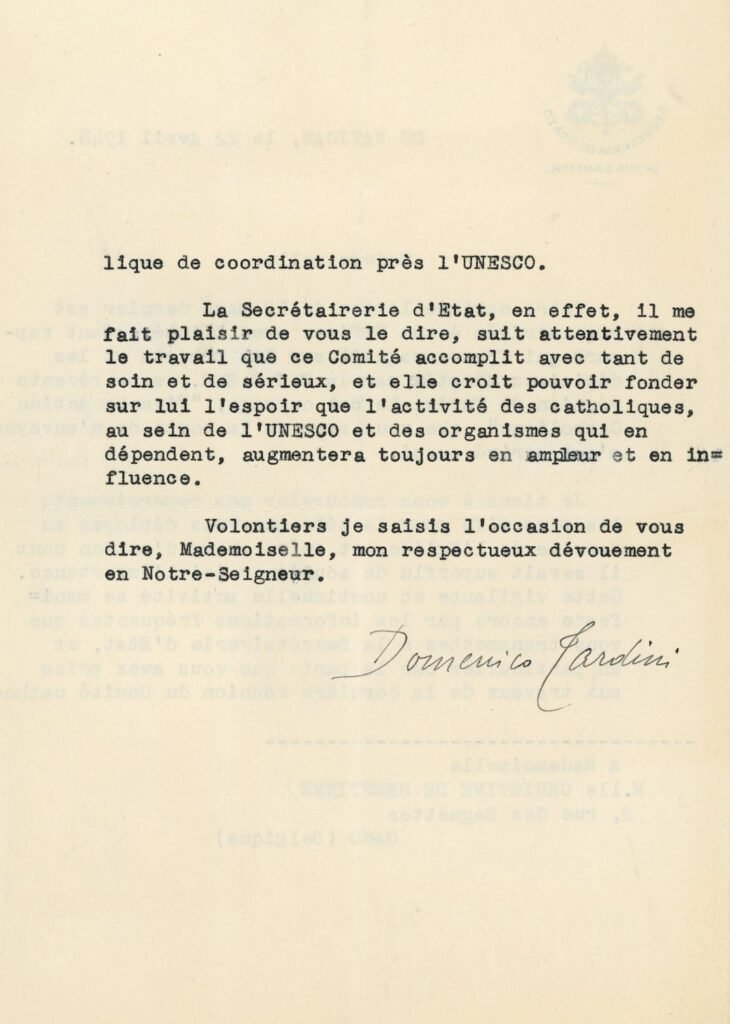
4. and 5. Letter of thanks from Dominico Tardini – working at the Vatican Secretariat of State to Christine de Hemptinne (1948). Through her international network, she obtained valuable information which she passed on to the Vatican. KADOC-KU Leuven, Archives Christine de Hemptinne: 791
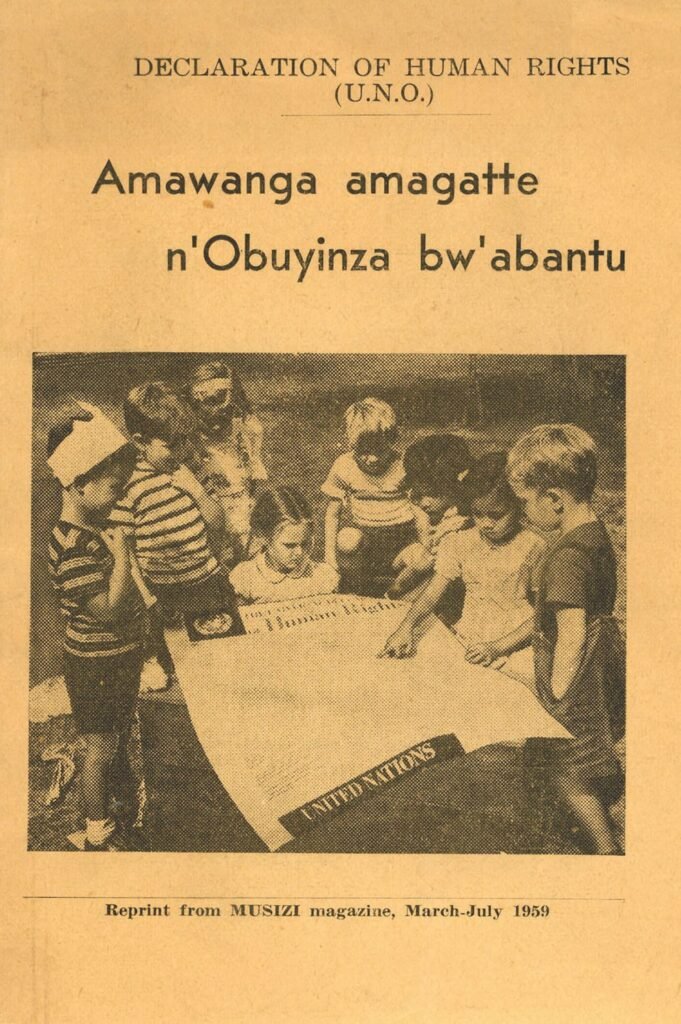
6. Universal Declaration of Human Rights in Luganda (1959). KADOC-KU Leuven, Archives Christine de Hemptinne: 980
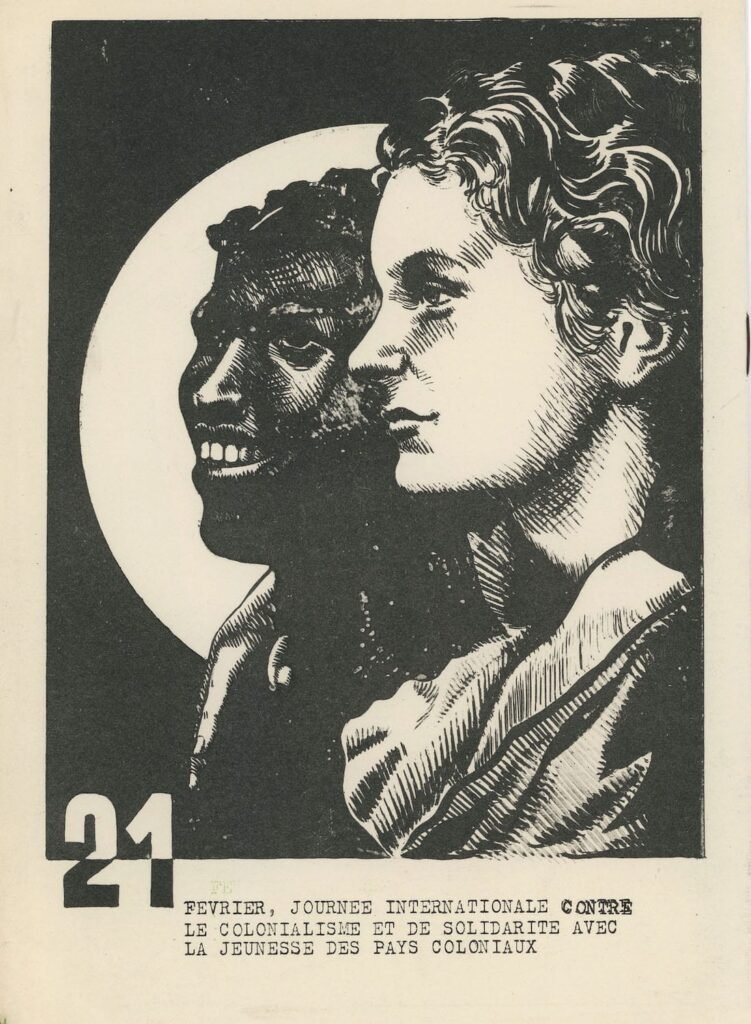
7. Magazine of the World Federation of Democratic Youth, marked ‘communist’ by Christine de Hemptinne. The Federation was supported by the Soviet Union and was Marxist and anti-imperialist in nature (1956). KADOC-KU Leuven, Archives Christine de Hemptinne: 532
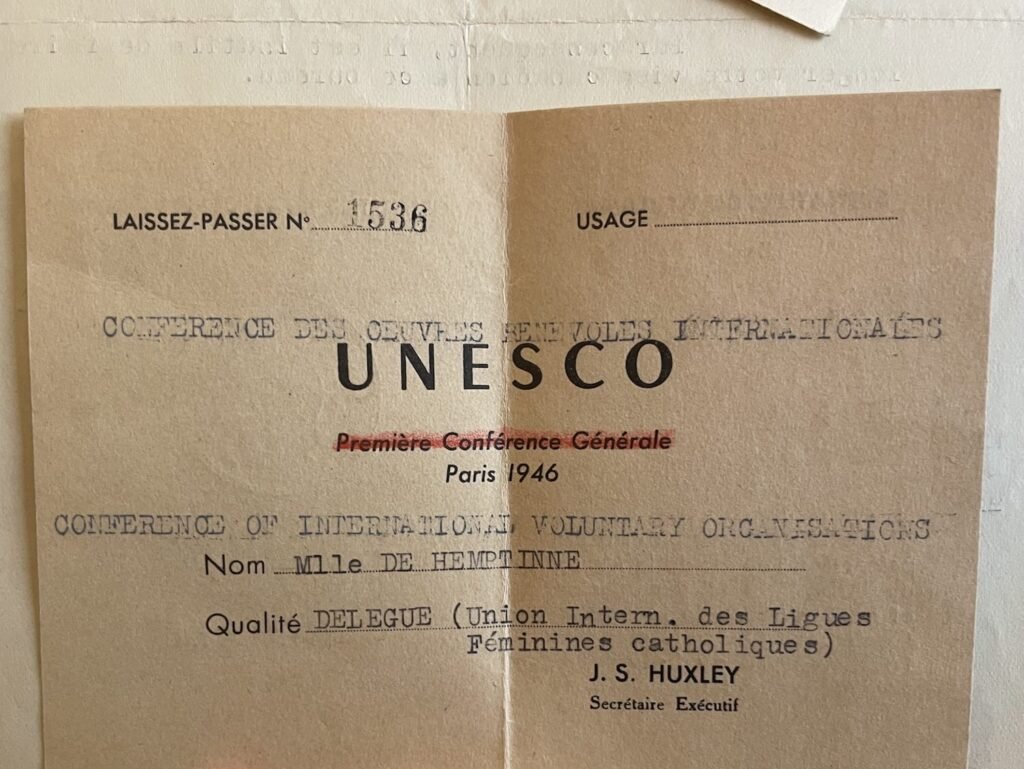
8. KADOC-KU Leuven, Archives Christine de Hemptinne: 924