
<- Mouse above the image to enlarge
From the mid‑1950s onwards, members of the World Union of Catholic Women’s Organisations intensified their international engagement. Leaders such as Christine de Hemptinne travelled extensively around the world, organising training and leadership courses for women in South America, Africa, and Asia. These initiatives focused on civil and political rights, social and economic development, and religious education. In line with the Vatican’s policy of “indigenisation” (which promoted the development of a local Church) Catholic organisations sought to encourage women of the so-called “educated” elites (assimiladas ou évoluées), to engage actively in emerging postcolonial societies.
Yet the Union’s efforts to contribute to the development of Church and society in the Global South did not escape the ambiguities of Western development cooperation. While the importance of local actors was repeatedly emphasised, leadership positions within the organisation remained almost exclusively in the hands of women from Europe and the Americas until the 1960s.
This Western paternalism became strikingly visible during Expo 58 in Brussels. On that occasion, Christine de Hemptinne drew on her extensive international and colonial networks to bring Congolese people to Belgium and have them “exhibited” in the Belgian Catholic pavilion. The staging of their so‑called “primitive” way of life was intended to generate support among visitors for the Western and Catholic “civilising mission” promoted there.
Photographs:
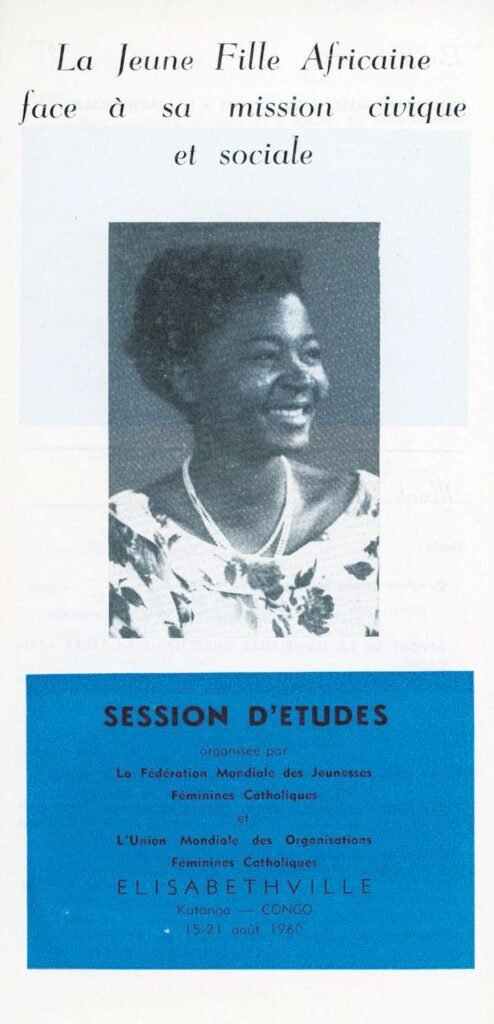
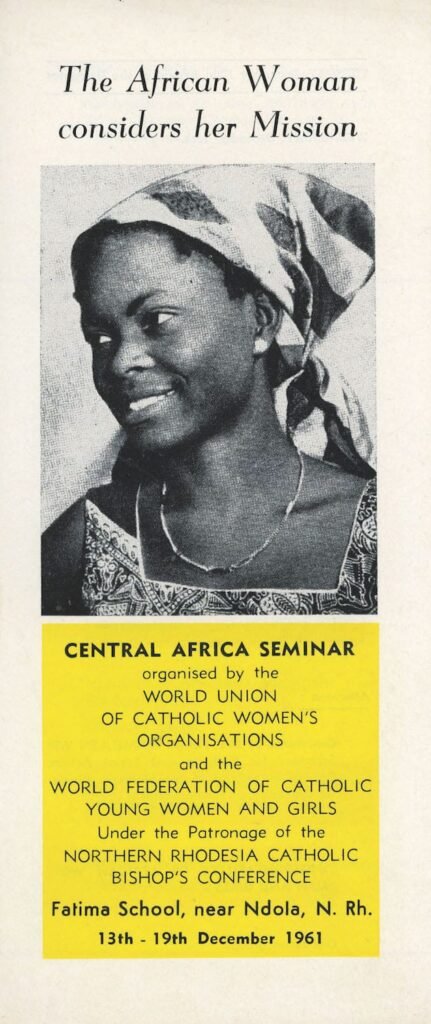
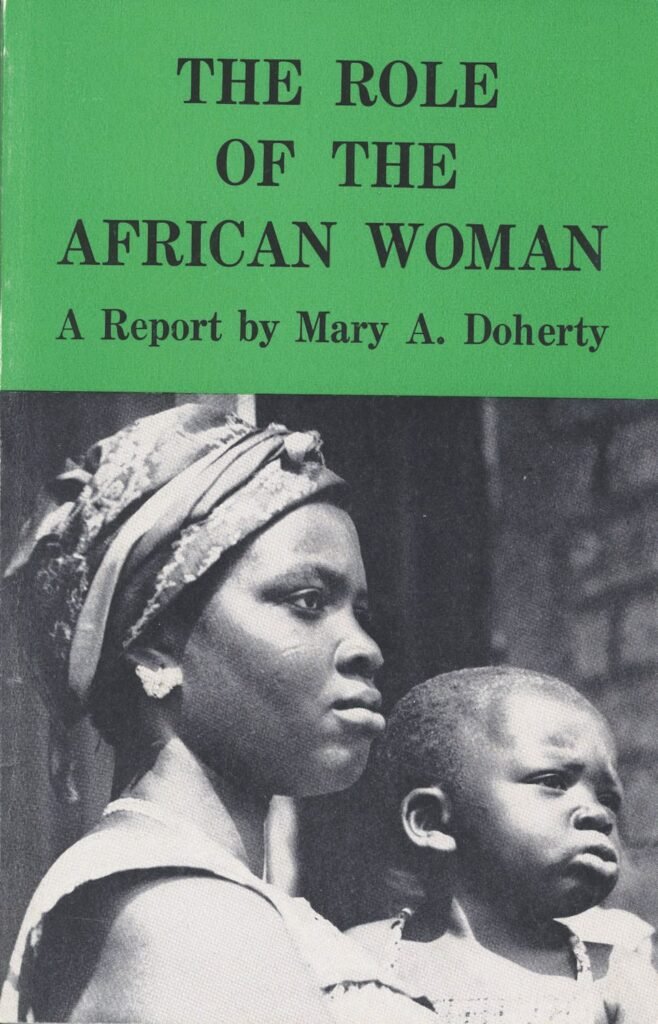
1. and 2. Brochures to seminars on the position of African women, organised by the World Union of Catholic Women’s Organisations and the World Federation of Catholic Young Women in Belgian Congo and Zambia (1960-1961). KADOC-KU Leuven, Archives Christine de Hemptinne: 348
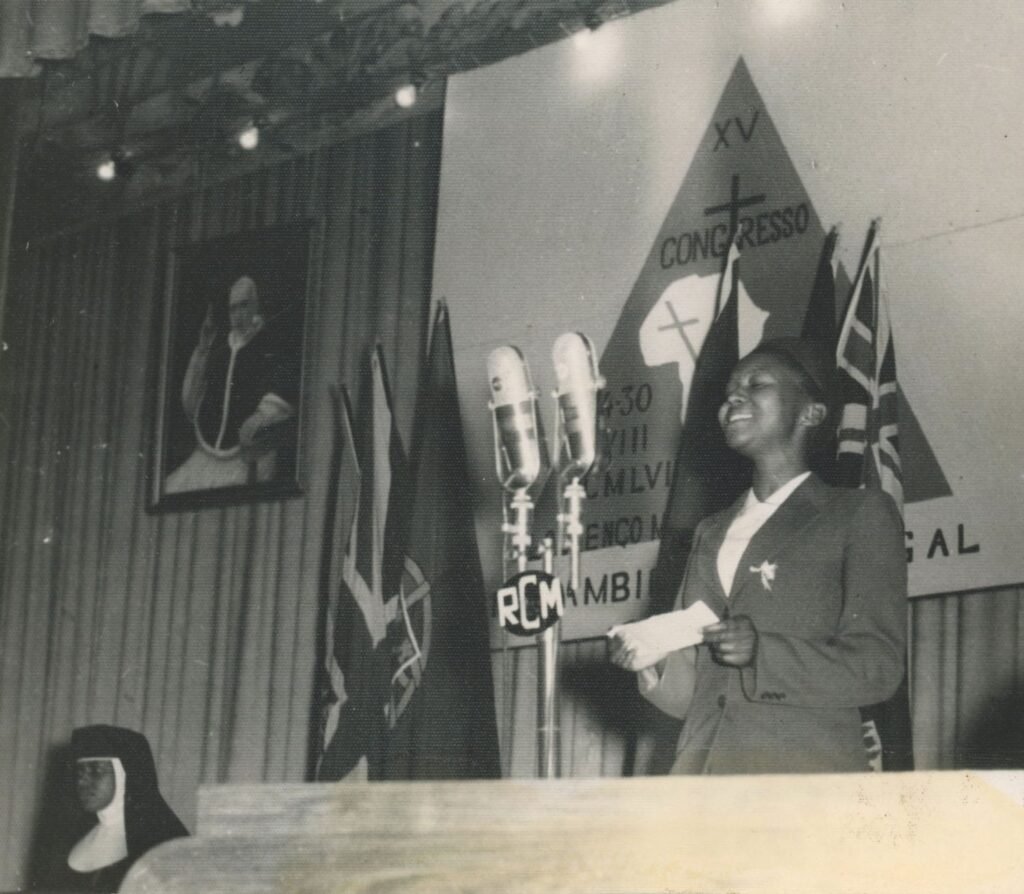
3. Congress of the World Union of Catholic Women’s Organisations in Mozambique (1958). KADOC-KU Leuven, Archives Christine de Hemptinne: 1018
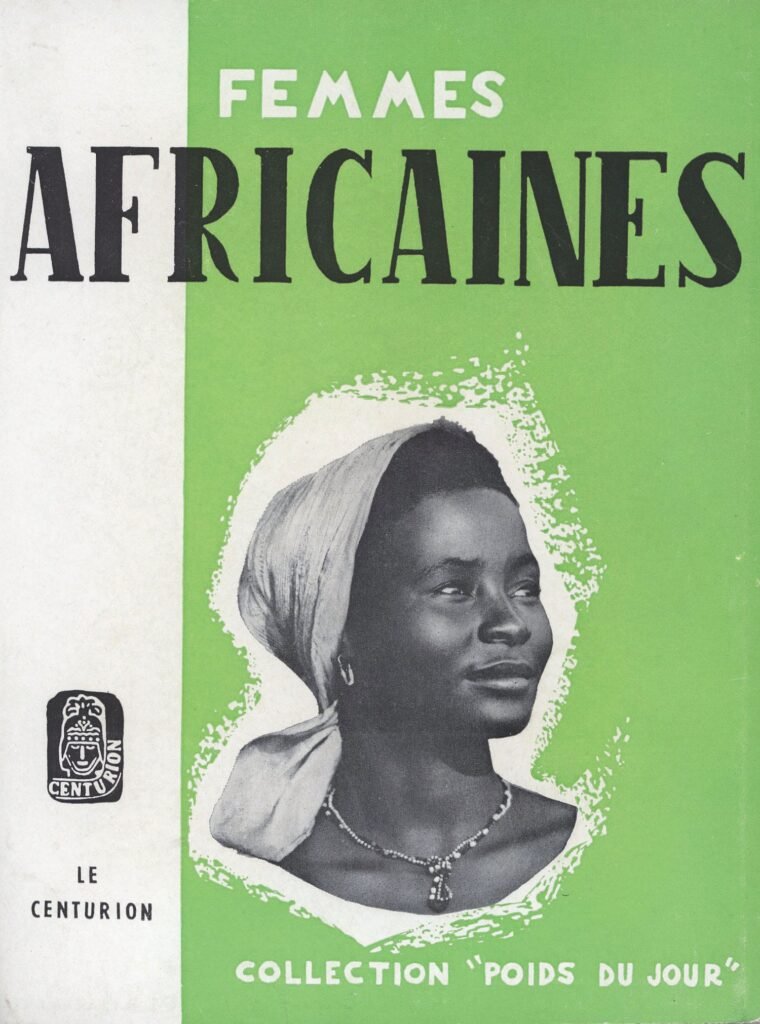
4. Book: Femmes Africaines (1959) contains testimonies given by women from Cameroon, Belgian Congo, Nigeria and Chana, among others, during a meeting of the World Union of Catholic Women’s Organisations in Togo. KADOC-KU Leuven, Archives Christine de Hemptinne: 348
5. Book The Role of the African Woman is a report about the seminars organised in the 1960s by the World Federation of Catholic Young Women in collaboration with the United Nations. KADOC-KU Leuven, Archives Christine de Hemptinne: 348
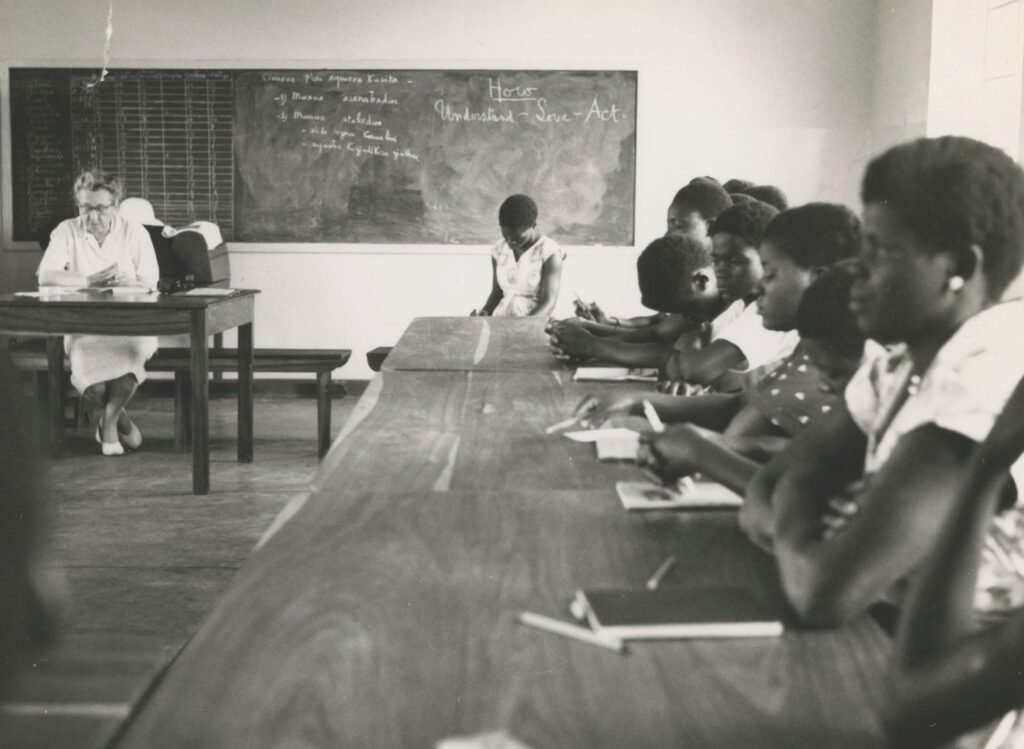
6. Christine de Hemptinne giving a guest lecture in Malawi (1961). KADOC-KU Leuven, Photo collection: KFA9318